Who Made These Tiny Pots.
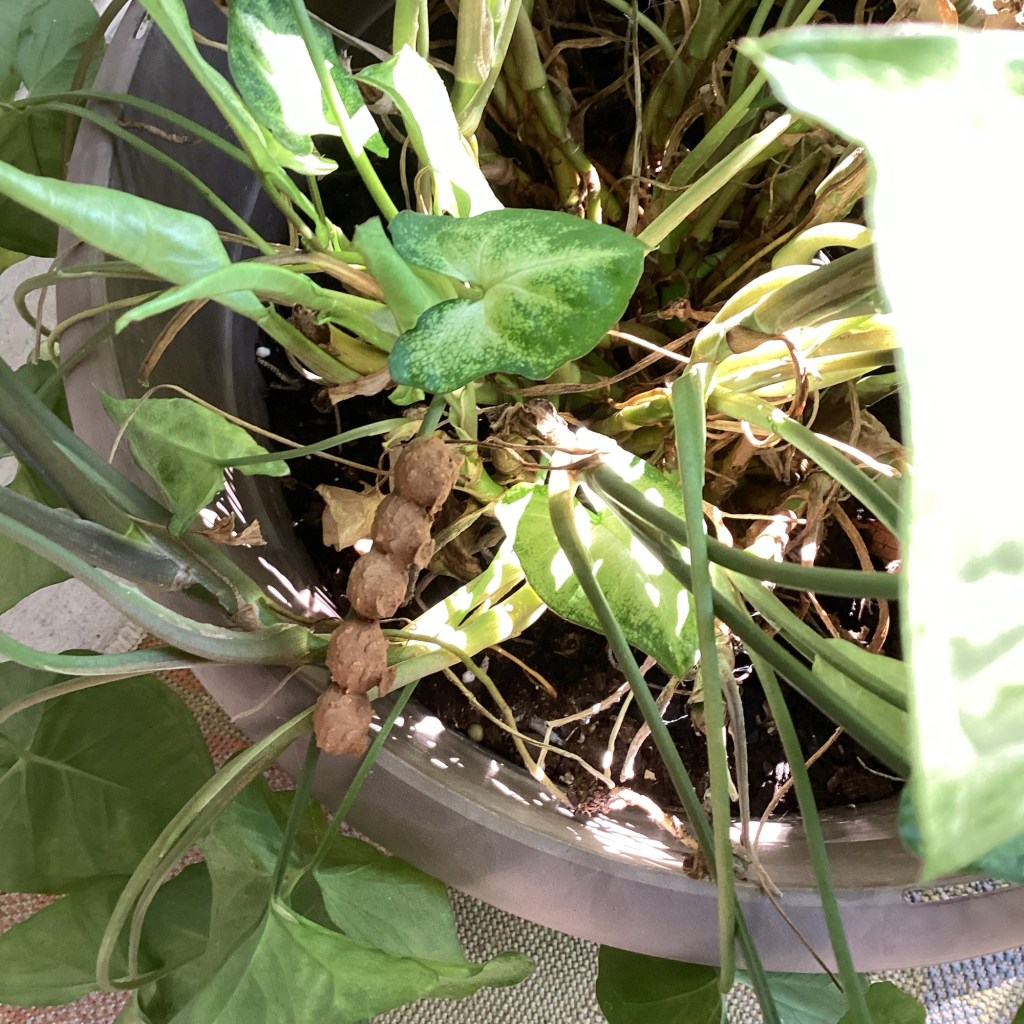
This morning my wife found these tiny pots on a stem of a plant growing on the front porch.
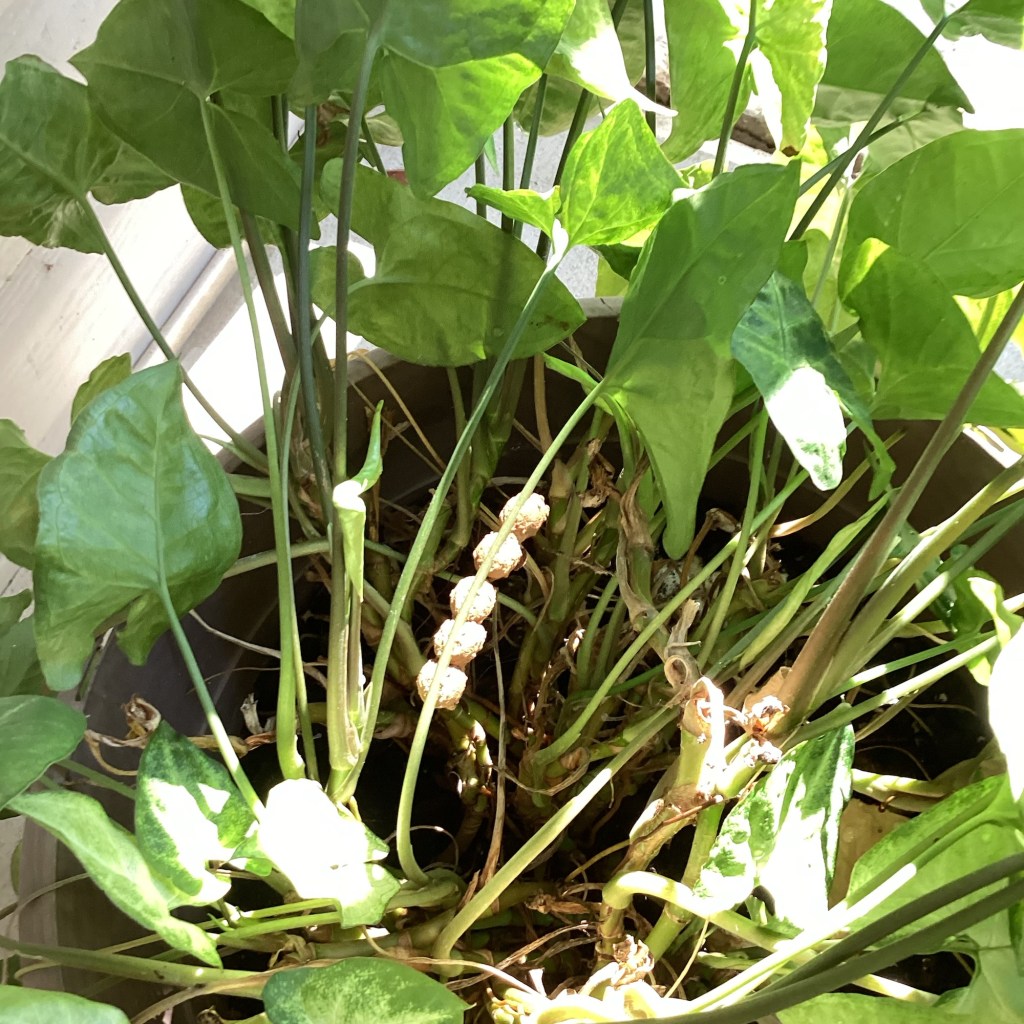
After doing a little research we learned that these were crafted by a Potter Wasp. These pots were all the same size (about 1/2 inch in diameter. So……
WHY DO THEY MAKE THEM AND WHAT’S INSIDE THEM?
Each of these tiny pots contains a paralyzed caterpillar and a single wasp egg.
Have you ever heard the phrase: “Don’t put all of your eggs in one basket”? Well, these wasp follow that rule. By placing them in several mud nests they help to assure that some of them will reach maturity to carry on the species.
Each little pot shows evidence of design. Each requires several trips to the mud source and the processing of the mud with saliva to just the right consistency. The mud must be carefully used to build up in circular fashion to shape the clay. The walls must be just the right thickness and the opening must be just right for inserting the caterpillars. Where could a little insect go to learn to be such an amazing potter? Believe it or not, they are born with this gift. As you can probably see, this requires a greater source to have created these insects with this ability. I believe it was God who did this. He created each creature with the necessary abilities to survive.
So…WHY WOULD I WANT WASPS IN MY YARD?
These wasps are beneficial. They help us in many ways. One thing that they do is pollinate our flowers which helps us grow our food. The adults feed on nectar from flowers. They must go to many different flowers to get a meal. As they go from one to another they carry pollen stuck to their bodies that can be transferred to other flowers.
THEY REMOVE OTHER DESTRUCTIVE INSECTS.
Another benefit is that the adults go through your yard and find destructive caterpillars that are eating up your plants and sting and paralyze them and carry them back to the pots and seal them inside. These will be a food source for the baby wasps larvae when they hatch out of their eggs.
WON’T THEY STING ME?
Believe it or not, they rarely sting humans unless you grab them and squeeze them in your hand. Another interesting thing about these wasps is that they are not territorial. They live solitary lives and once the pots are made and the eggs and caterpillars are installed, they do not hang around like other wasps that will defend their nests. You probably have had an encounter with wasps that build paper nests that will attack anything that gets near them. These ones, however, do not pose that threat.

HAVE YOU TRIED TO MAKE A CLAY POT?
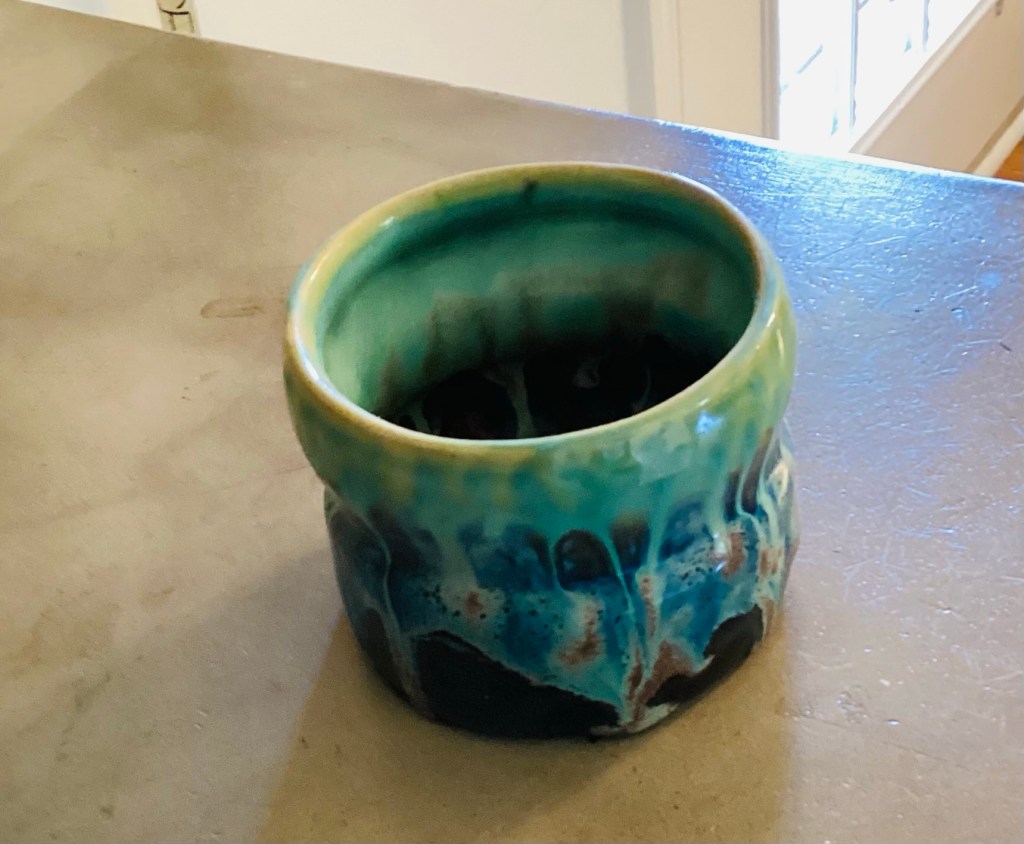
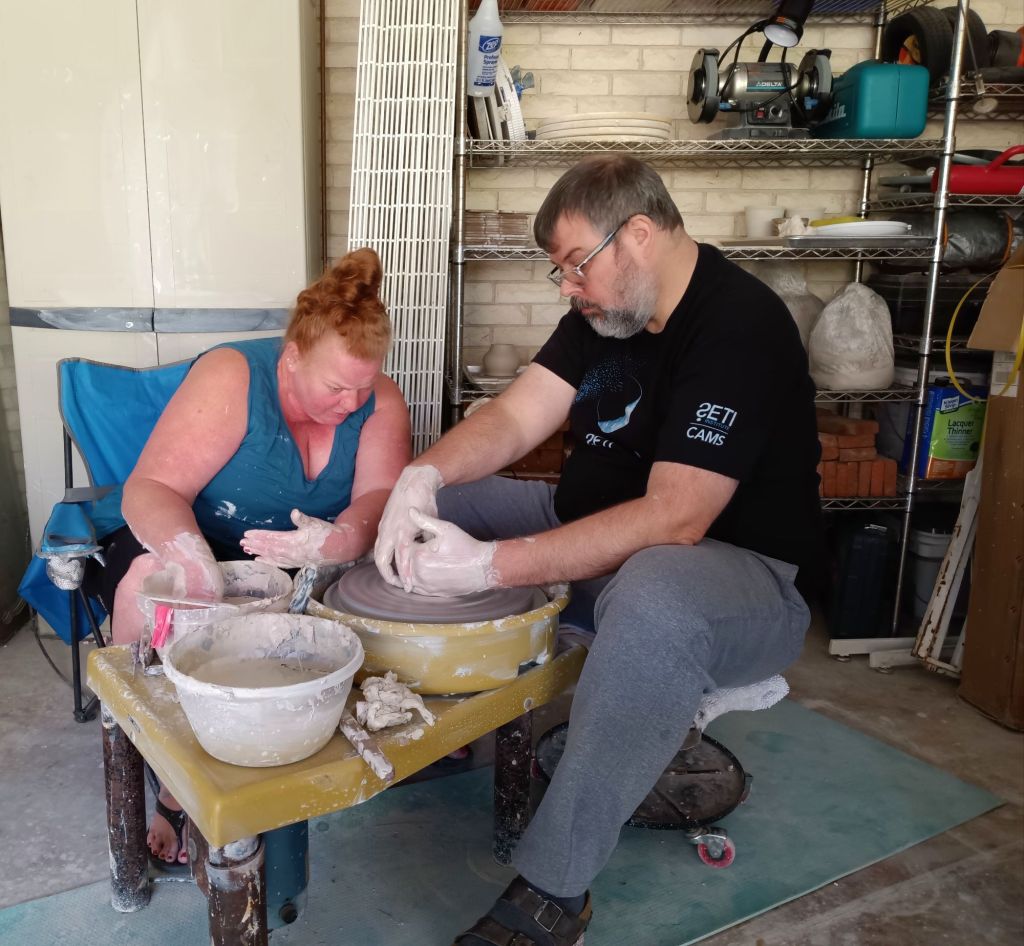
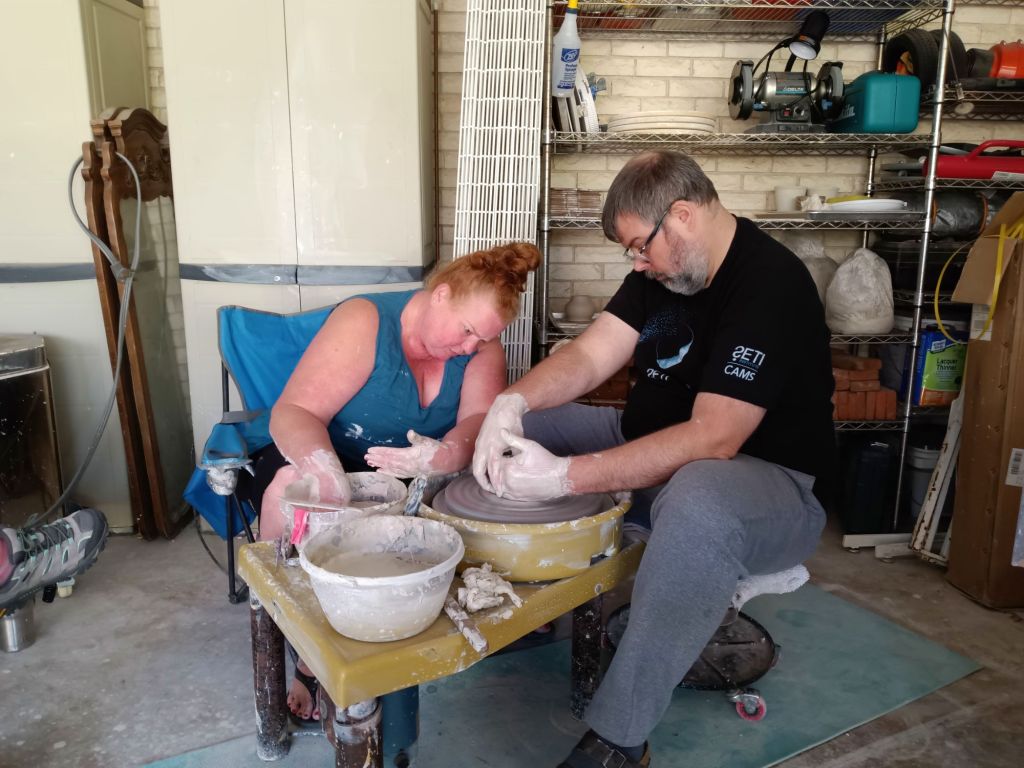
I remember trying pottery when my wife and I visited by son and his wife in Texas. She is a master at making many different kinds of pots. We worked with a spinning wheel on which we placed a ball of wet clay. It was more difficult than I had first imagined. With our hands we had to manipulate the clay just in the right way to build up the walls. After a few failures we were able to make a small bowl. This had to be carefully removed from the wheel and then baked in a kiln for several hours while the clay hardened. As I look at the pots made by these tiny wasps I am amazed at how intricately they are designed,
MORE INTERESTING FACTS:
There are around 30000 different species of potter wasps.
They are usually small: from 3/8” to 3/4” in length.
They can create many different kinds of pots depending on the species.
These wasps are solitary and only come together for mating,
Over 90% of all wasps are solitary.
They live very short lives of just a few months.
They are only active during the warm months of the year.
The young adult wasps can emerge in as little as 25 days or stay inside the protective pots for up to a year.
Most of the young over-winter in their clay pots to emerge in the Spring.
The eggs often open allowing the larva stage to emerge in 2 days of laying. The larvae feed on the encapsulated caterpillars for as long as they are inside the pots.
Potter wasps are non-aggressive.
Potter wasps usually gather soil and water separately then mix them into just the right texture for building nest pots.
The caterpillars, once stung and paralyzed, do not die immediately. They remain fresh for the larvae to feed on.
SO….WHAT LESSONS CAN WE LEARN?
Like all of the things God created, each shows evidence of thoughtful design. Each creature has a purpose in the environment. Design has function. We can see clearly that these wasps are a testimony to the glory of God. If He could make such tiny insects with all the abilities necessary for survival, He certainly has designed us for a specific purpose too. Do you know your purpose? Why were you created with all the abilities and special giftedness you possess? God created you for relationships. We, unlike the wasps, need others to have productive lives. We must have a relationship with God through His Son, Jesus. We will thrive in Christian community where we can use our gifts for the good of the whole. As King Solomon was able to gain wisdom from studying ants, we also can learn from the wasps.
I HOPE YOU HAVE ENJOYED LEARNING ABOUT POTTER WASPS.
Be sure to take some time enjoying the outdoors. There are so many wonderful things to discover in God’s creation.


Fascinating! I have never seen this before. What a gift! I love how you always point to our God in your studies. 🙂
LikeLike
Very interesting Thank you Glenn
LikeLike