Have You Heard the Carpenters? No, Not the Singers…the Bees!

Back in the seventies one of my favorite singing groups was the Carpenters. They truly created some beautiful music. This post, however, is not about this singing group but some other creatures that create some good vibrations.

So, What’s the Buzz?

Every Spring at our home in Tennessee, we hear a lot of buzzing around our house. If you walk out on the porch you will see hovering bees about the size of the bumblebee, but these bees don’t “bumble”, they bore!
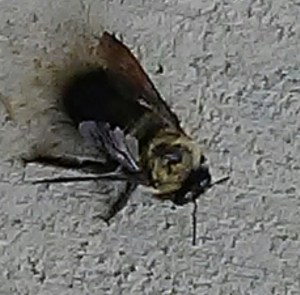
 This is an Eastern Carpenter Bee.

If you look under the railing you will find large piles of sawdust where they have drilled round holes on the bottom of the boards. These little creatures can cause a lot of damage if your porch is constructed of pine or cedar, their favorite nesting material. Interestingly, They don’t eat the wood! They just use it to create nests where they can raise their young.
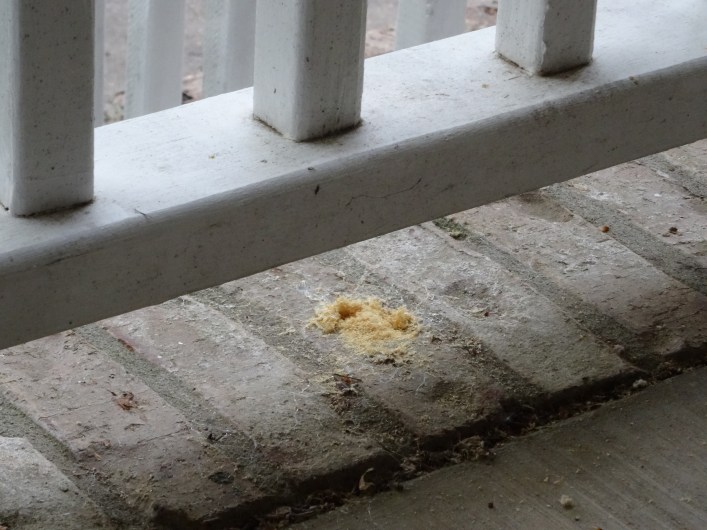
When You See the Sawdust Piles You Know the Bees Are About!
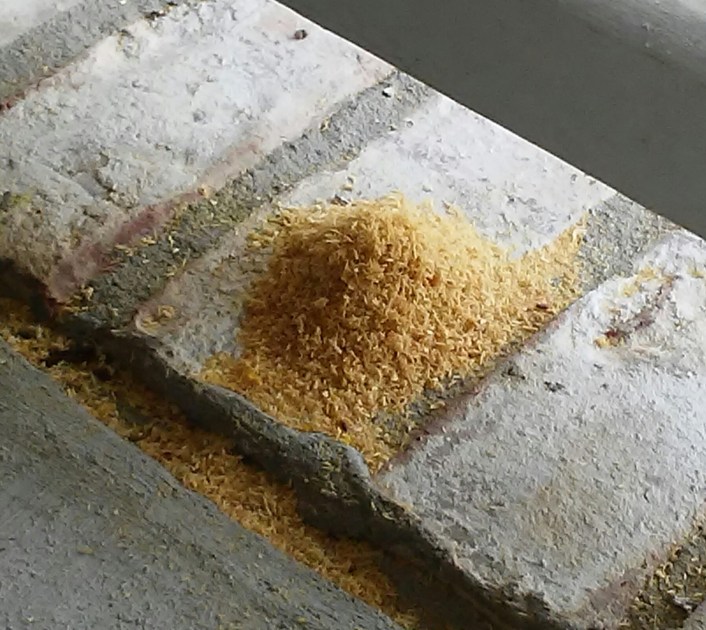
 

Notice that the holes they bore are round and about a half-inch in diameter.
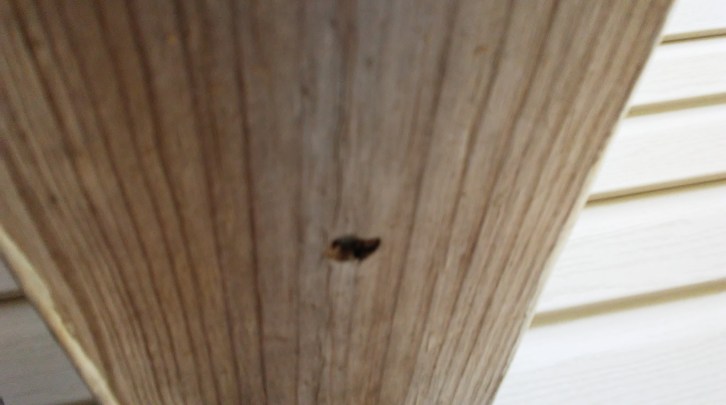
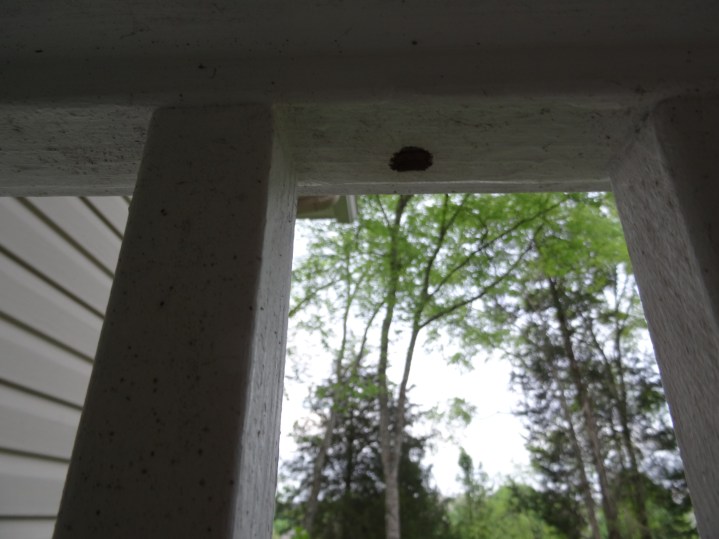
Though they make a lot of noise and will buzz at you if you move something through their space, they rarely cause any harm to people other than the destruction of their wood edifices. The males, which are the most aggressive, do not even have stingers, so they can’t sting. The females do have stingers but rarely sting unless someone is trying to get into their nest.

Below You Can See Them Hover.

Speeders Beware!

Scientists have conducted several studies and found that these bees can actually identify one another. They have also discovered that they rarely respond to an invasion of their territory unless the invader is moving quickly. They tied several bees to strings and slowly lowered them into the territory or just let them hang there, and the bees showed no aggression. If, however, the strings were moved quickly, there was an immediate response. I have noticed that when I wave my arm or a butterfly net through their space they aggressively buzz about. Since I know the males can’t hurt me, I pursue those doing damage to my house. I have also treated several of the existing holes with bug spray. We will eventually have to replace the wood railing with a plastic or metal substitute that the bees can’t destroy.

Not All Bad!

Though many don’t appreciate their burrowing tendencies they should recognize their beneficial characteristics. Each and every creature God created has a purpose! Carpenter bees actually do more good than harm. They are excellent pollinators and especially good at helping your garden production of tomatoes and eggplants and many other crops and ornamental flowers. They can pollinate flowers that others cannot. These bees were created with special mouth-parts for cutting through the outer membranes of flowers to access the nectar inside. As they perform  this operation, they become covered with pollen which then gets transferred to the next flower.

“Good Vibrations”

They also pollinate by vibration! Their buzzing near the flowers causes the anthers of the flowers to vibrate thus releasing pollen. This is similar to what some farmers do to increase their tomato production by using an electric toothbrush to shake the flowers. Others just shake the stalks holding the flowers to accomplish the same results. The bees get it done musically. I guess that is what is known as “Good Vibrations“!

Food for Others Continue reading “Have You Heard the Carpenters? No, Not the Singers…the Bees!”
Have You Ever Eaten Lotus Seeds? AKA “Cajun Peanuts”

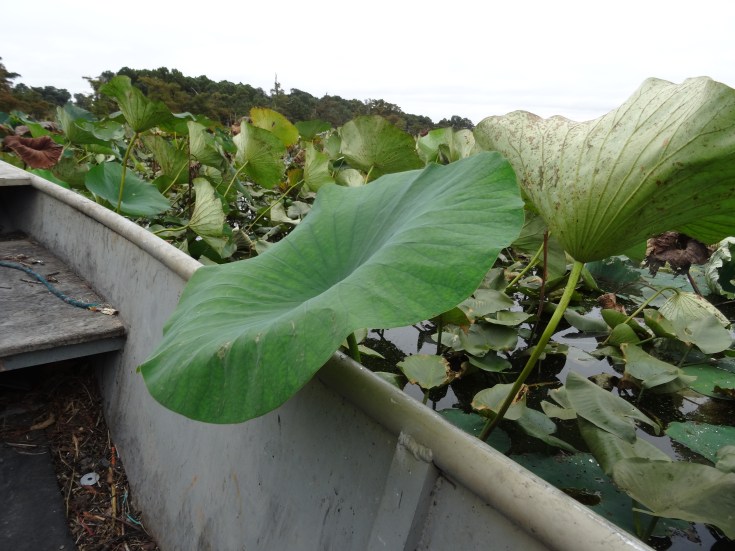
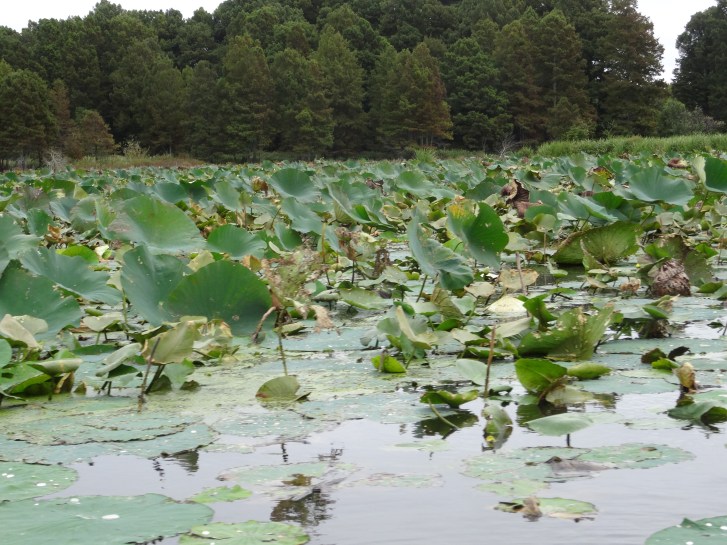
One of the interesting plants that God created for man to enjoy was the American Lotus Plant. It not only provides beauty, it is also very useful to man and other creatures providing both food and shelter and even a bathing place for birds. Let’s learn more about these unusual plants.


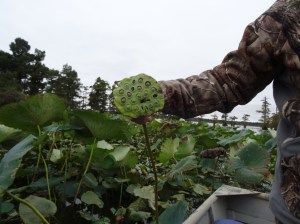
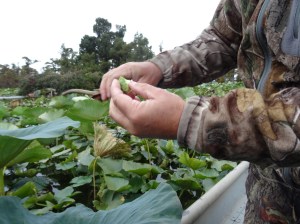
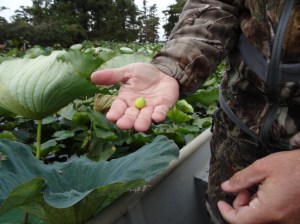
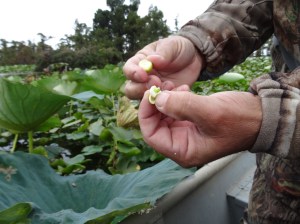
Last Fall my son-in-Law, two grandsons, and I went for a boat ride on Reelfoot Lake. Our guide for the day let us experience a new tasty treat that grows right in the lake. Though I had often seen the the seed pods of the American Lotus plant in flower arrangements, I didn’t know that they contained edible seeds. They are often harvested in the months of August and September just after they flower, the petals fall off and when the pods are still tender. When you break open the pods you can find about 20 seeds inside. Squeeze one out of its outer skin and pop it in your mouth. They taste sort of like a water chestnut. They can also be boiled and eaten. Some people boil them down and turn them into paste that can be used like flour or as a thickening for soups.


The young leaves of this water plant can also be sliced up and cooked like spinach. I also learned that the long roots, about as long as your forearm, can be sliced up and fried like pancakes. These plants were a mainstay in the diets of Native Americans who lived near ponds and lakes where they grow in abundance.

The larger leaves of this water plant were often used to wrap food for cooking, keeping the food contained and moist until unwrapped and eaten.


When God designed the leaves of this plant He gave them a waxy surface so they would float on the surface of the water providing a natural bird bath as they collect fresh rainwater and create small pools in the centers of the leaf. The leaves also provide shade and protection for the fish that make nests under them. Fishermen like to throw their lures up into a bunch of these plants knowing that their lures will usually slip right through them and that the big fish can be found there. Many small animals can actually use the leaves like a raft out in the open water.


If you want to see the flowers of these plants you only have a short time to do so. The flowers bloom and in two days time they have dropped their petals. The nectar and pollen from these flowers provide food for many insects. Fortunately they don’t all bloom during the same two days so there can be different fresh flowers providing food for several days.


The next time you go boating in a lake full of water lilies, look for these plants. You will be glad you took the time to investigate these amazing gifts of God.

Fried, Almond Crusted and Broiled Bass Fillets: A Light, Tasty Treat


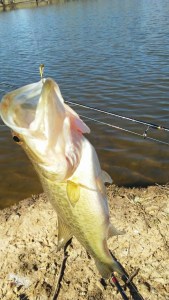
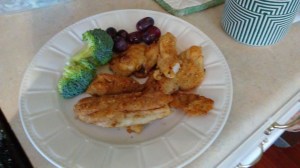
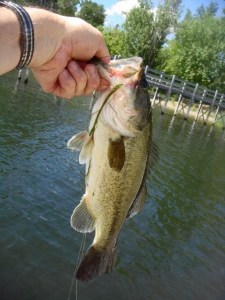
I love the early Spring time when the bass are easy to catch. One of the best tasting fish, they can be prepared several ways. In the last two weeks I made several tasty meals from ten bass I caught down at the lake. After filleting them, I rolled pieces in a mixture of cornmeal and whole wheat flour with a little salt, pepper and ginger powder. An easy way to apply the mixture is to put it in a small plastic ziplock bag and drop in the fillets. Shake it until they are totally covered and drop them in a frying pan with melted butter. Cook briefly on both sides and you are ready for a yummy meal. Some people like to roll the fish in egg before adding the flour and cornmeal for a more crispy texture.


These were served with broccoli and grapes.

The fish below have almond powder mixed with the flour mixture. They have more of a crunchy texture. The almonds blend with the bass flavor to create a tasty meal. Melon and cilantro make a nice meal.


Another way to prepare them is to put them into fish tacos.

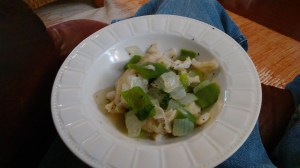
A lighter way to cook them up is broiling. I added a little water to a frying pan and heated it up. While it was heating, I cut up some bell pepper, onions, and cilantro. I then put the fillets into the pan and poured in the veggies. I added a pinch of Italian seasoning, a sprinkle of ginger powder, salt and pepper. I covered the pan and cooked it until the fish was tender and flakey. I drained off the excess water and put the fish and veggies into a bowl. It makes a tasty, light, meal, very low in calories. Bass also is a good fish to use in making chowders.


You better get get out there and get some bass while they are biting!


Turtles Everywhere!

Turtles make up one of the most interesting groups of reptiles. I seem to find them everywhere I go fishing, especially since I moved to Tennessee. In this post I will show you several that decided to take my fish bait.

Some of the others I saw sitting around the lake or in the waterways nearby. One even traveled up to my yard to lay her eggs last Summer.

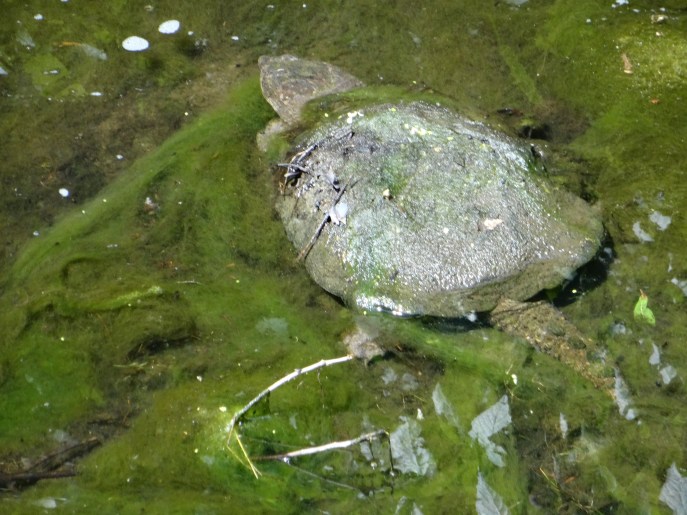
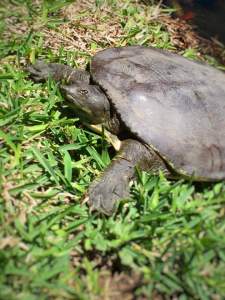
Above is a baby Spiny Softs-shelled Turtle”. It was my favorite turtle.

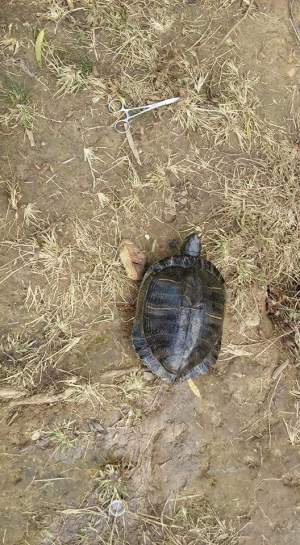
This is one of the most interesting turtles I have ever caught. Notice the red and yellow on the plastron under its chin. I catch so many turtles in the small lake where I fish. Of course, I release them all back into the lake after examining them and making sure the hooks are removed.


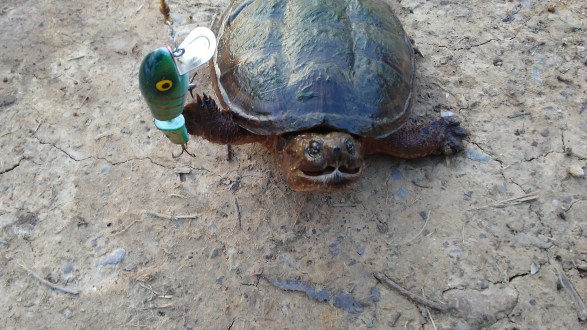
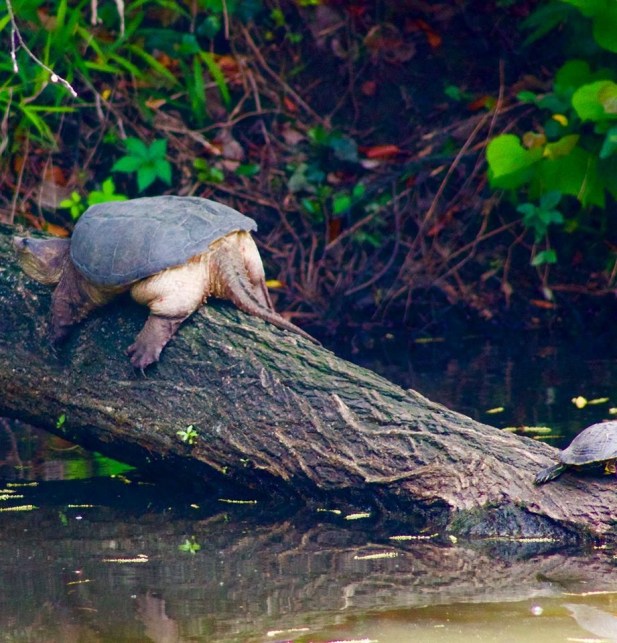
This unfortunate snapping turtle got snagged on my fishing lure as I brought it back to the shore. He wasn’t happy to be so rudely taken. After snapping and hissing, I was able to remove him with my hook pliers and set him free. This is just one of three snapping turtles that I have caught down at the lake so far. One of the others snapped out and jumped toward my camera and hit the lens. It got my attention and taught me to respect these aggressive turtles.

These turtles can grow to massive sizes. Below is a picture of one I saw in a stream-bed under a dam at Radnor Lake State Park in Brentwood, Tennessee. It was about three feet long.

Interestingly, the Snapping turtles are actually good fishermen. They actually use a lure, part of their tongue that looks like a worm. As they wave it in the water with their mouths open, along come fish trying to eat the worm. Snap!  Guess who becomes dinner?

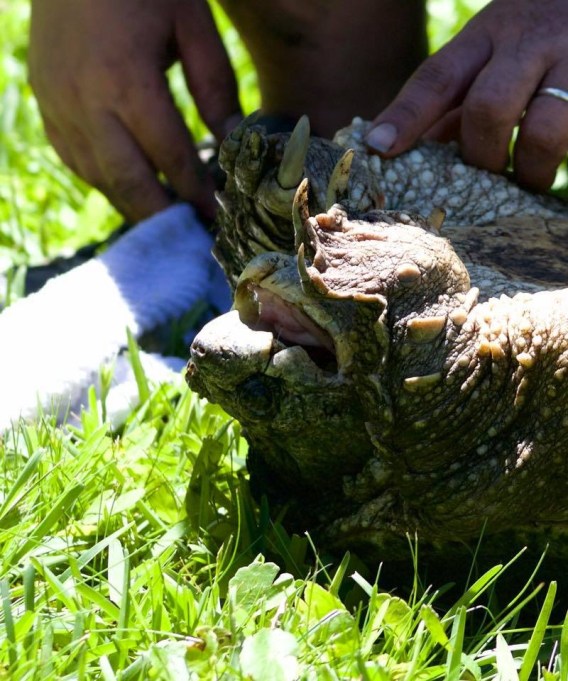
Here are some more pictures of snapping turtles I caught since publishing the first post. This snapper tried to bite me a couple of times. Needless to say, I moved quickly! I was able to flip the biggest one over and get some pictures of its belly. Notice also the long claws.

I caught one on chicken liver and the other on a hunk of bluegill. I was trying to catch a catfish. This big one is about two feet long.


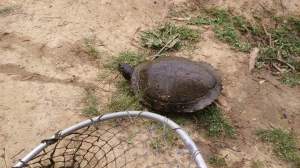
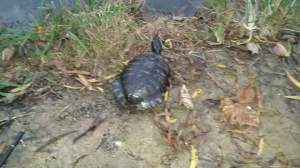
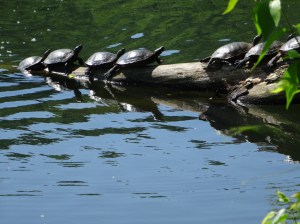
Here are some more turtles. Notice that most of these are Red-eared sliders.


Time to lay some eggs.

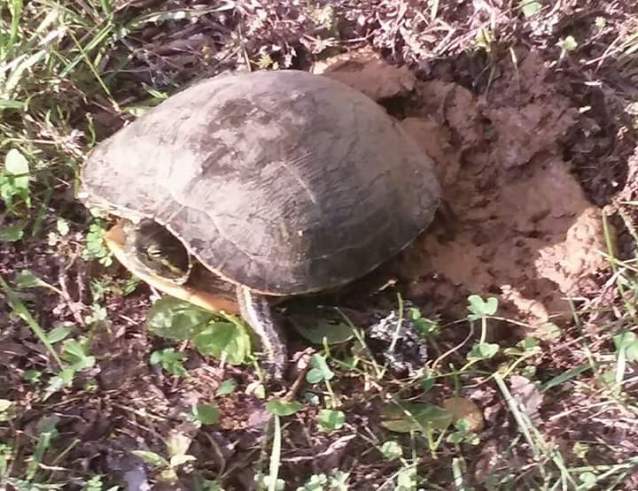
The turtle below laid eggs under a tree in my front yard. It traveled about a quarter mile from the lake to my yard.

Can you see the area behind her? She dug a hole and carefully laid and buried the eggs.


Red-Eared Sliders


Worms and cut up bluegill were too tempting to these turtles.


One day I caught seven turtles in just a couple hours. The picture (above right) with three turtles, shows three of the seven still on shore before I let them all go back into the lake.

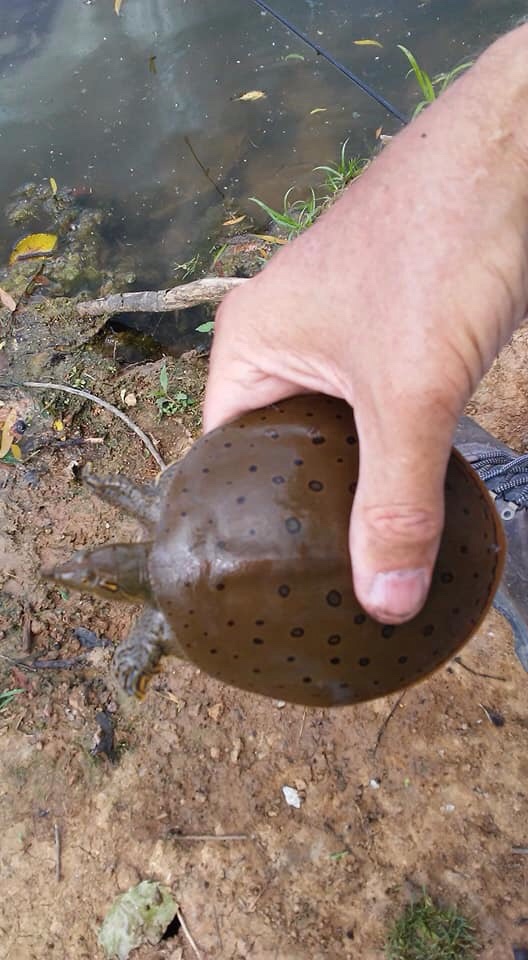
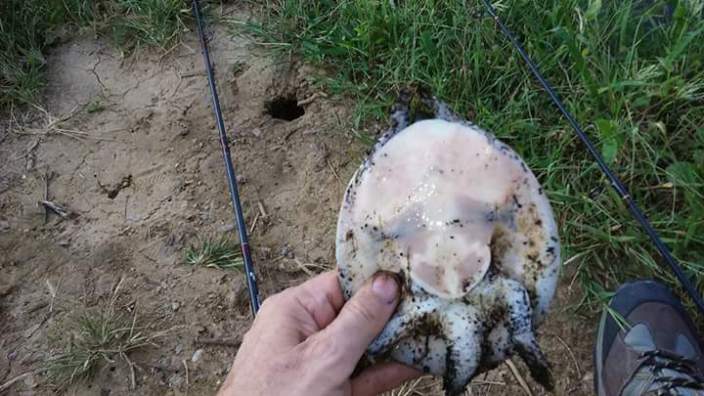
Below is a softy!

One of the turtles was much different from the others. It was a soft-shelled turtle. The picture above shows the underside of a Soft-shelled turtle.

Keep Turtles Where They Belong!

Though most turtles spend most of their lives in the water, some types are more terrestrial, like the box turtles.  The majority of water turtles are the Red-eared sliders. Unfortunately many of these have been introduced into the environment by people with good intentions but a poor knowledge of the environment.

When I was a child, red-eared sliders were sold by the thousands to people wanting a cute pet. Practically every kid had one in a plastic container. What they didn’t tell you when you bought one was that they grow up and often outlive their owners. When the turtles got bigger and people didn’t like maintaining a suitable habitat for their pets, they took them to the nearest lake or stream and released them. This caused a lot of problems for the native turtles in those regions. Competition for food and space created a difficult situation for the natives. Unfortunately many of these species were threatened and some were completely wiped out in certain areas. Today there is an over-abundance of this species. Go to any park pond and you will probably see what I mean. The turtles are often stacked on top of each other on the logs in the pond and on the shore-line.

Turtles do serve a purpose in the areas you find them. They are the clean-up crew. They will eat dead and decaying fish, help control the insect population, and regulate the fish if there are too many of a given species.

Enjoy Them Where You Are!


When God created the turtles He designed them well for where they live. Their hard shells, ( for most turtles), provide great protection from predators who seek to eat them. When the enemy comes they just withdraw into their shells and hide until the threat passes. Many also have offensive weapons to use to drive off other animals or each other. The snapping turtles are probably the best example of this. They can literally snap off a broom handle with their powerful beaks. Turtles also give off warning hisses when they think someone or something is getting too close.


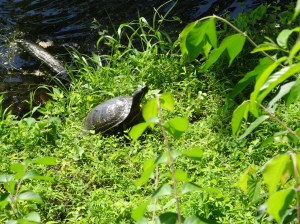
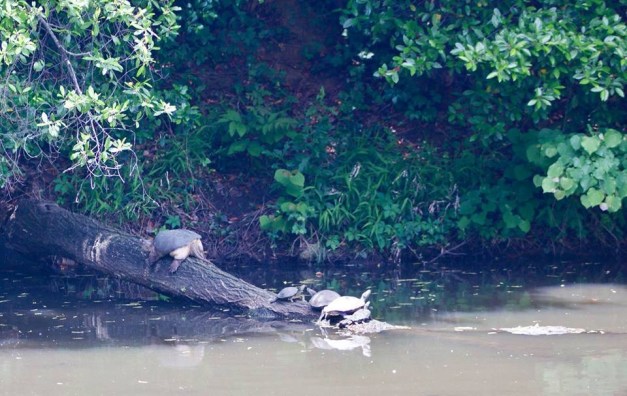
Below are a couple pictures from Texas of some large turtles that come up and sun-bathe on shore at my son’s house on Spring Lake.


Just Hanging Out In The Sun!

Notice that more than one species can occupy the same area. This big guy must be at the top of the pecking order. Turtles love to lay out in the sun to warm up.


Look For Turtles Near You.

Why not take some time to watch the turtles in your area. They have many interesting habits and are sure fun to watch while sitting lake-side and fishing. You may see a head pop up out of the lake when they come up for air. Look along the shore-line. They will often be sunning themselves on a the ground, a rock or a log. Just be sure to take along a pair of pliers to remove the hook if they decide to eat your bait!

Looking for Gold…..Golden Trout, That Is!

One of the most fun types of fish to catch are the trout. There are so many different kinds of trout and they all are so interesting to observe. Trout also a very yummy if you decide to keep them. Just watching them is a thrill. In this blog post you will learn about several different kinds of trout. I hope you find pleasure in learning about these amazing fish God created for us to enjoy.

Click below to open the Powerpoint presentation. You can also open it in Keynote, if you have that app.

Looking for Golden Trout

“If It Quacks Like A Duck” …What If It Doesn’t Quack? Can It Be A Duck?


Have you you ever seen a duck like these? I had not until my son sent me some pictures of these strange birds. Apparently you have to be in the Southern- most part of the United States to see them. These ducks were photographed in Texas feeding in the lawn next to a lake. They often go unseen in the areas where they live because they do most of their feeding at night. You will probably hear them before you see them, however. They are very loud. Don’t expect to hear quacking! They aren’t called “Whistling Ducks” for nothing. These are Black-Bellied Whistling Ducks. They are more similar to the swans in behavior than the ducks you and I are most familiar. So how are they different?

Black-Bellied Whistling ducks spend more time on the ground than in the water. They also are monogamous: they mate for life with just one partner. They, in addition, are difficult to tell  apart by gender since both the females and the males look alike, which is quite different than other ducks. They usually nest in trees or other high structures that offer cavities for the eggs to be placed. If you look at them closely you will notice they have much longer legs than other ducks. These ducks usually stay in the same areas throughout the year. Though they might move around within that space, they really don’t migrate.

Some other interesting things about these ducks is how they often practice “egg dumping“. What does that mean? The females occasionally  sneak into another Whistling Duck’s nesting area and dump the eggs already there and replace them with their own eggs. I guess this is a sneaky way out of having to feed the ducklings when they arrive. These ducks eat mostly plant material being primarily Herbivores. They often augment their diets with a little protein by consuming small aquatic insects, snails and spiders. They also may raid a farmer’s field to feed on rice and corn though usually this is after the primary harvest where they are actually serving as clean up duty for the remaining grain.

Black-Bellied Whistling Ducks have a number of natural enemies.These include animals that feed on their eggs like: raccoons, skunks, rat snakes, and bull snakes. Other animals prey on the baby ducklings including: Bass, catfish, gar, and even fire-ants. The adults are occasionally snatched up by great-horned owls.

These ducks are very colorful. Note their pink beaks, gray heads, black legs and chocolate brown wings. If you watch them in flight you will notice they have white wing patches which are mostly out of sight when on the ground.

So…if you are in Texas and if you hear a loud “Waa-Choo” whistling sound, you might find these ducks nearby. I can’t wait to return to my son’s house to observe them first-hand!


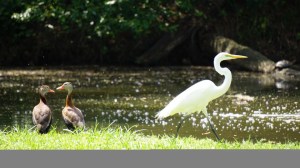
Here you see a pair sharing the shore with a Great Egret.


All of the above pictures were taken by Calvin Gluck in his yard inTexas. Thank you, Calvin.

Below are a couple pictures taken at the same lake by a neighbor of Calvin, Jamie. Thanks for letting me include them in my blog.


A Rarely Seen Creature: A Springtime Beauty!

While walking in Dogwood Canyon in Missouri this past week I discovered a creature I had never seen before. Apparently it is only seen in its adult stage in the months of March through May. It is often mistaken for a butterfly when it is actually a moth. It fooled me until I took a closer look. Let’s learn about the Grapevine epimenis.


Click below to open Powerpoint presentation. If you have the Keynote app, you can also open it there.


Diurnal Moth Grapevine epimenis

Turkey Time: Learn about a rare Turkey!

One day my grandchildren and my wife and I went out to a farm to visit a friend that had an amazing turkey. This turkey, I came to find out, was a rare bird…literally!  I hope you enjoy learning about this turkey and also, like me, come away amazed at God’s creativity in designing such an interesting bird. Enjoy!


Click below to open the Powerpoint presentation. If you have the Keynote app you can also open it in that.


turkey-time-chapel

Go Ahead and Stick Your Neck Out!

One of the amazing creatures that God created gives strong evidence of design. In order for this animal to exist it must have had all these design features in place when it was created or it would have quickly ceased to exist. Let’s take another look at the amazing design of the Giraffe. My wife and I enjoyed visiting the zoo and taking these pictures. I hope you enjoy them too!


Click below to access the Powerpoint presentation. You can also open it in Keynote, if you have that app.


the-giraffe-evidence-of-design