Origami Lifting Power

I recently watched an amazing documentary on Nova about the engineering developments using the principles of origami folding. They gave examples in building designs, medicine, mechanics, aeronautics, architecture, outer space design, and so much more. As a hobby I have experimented with the power of a piece of paper in its weight bearing abilities. I thought you would enjoy seeing one example.


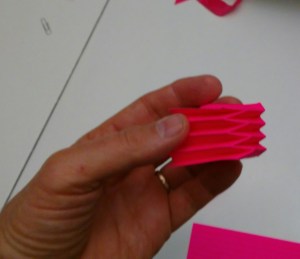
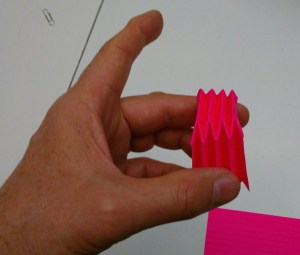
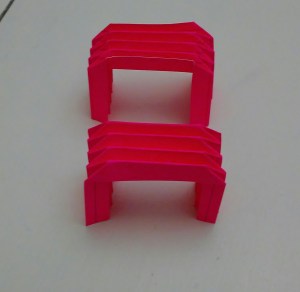
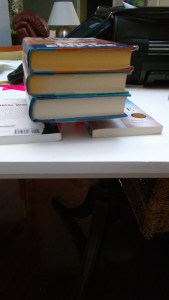
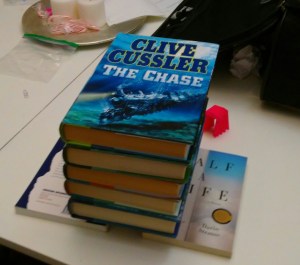
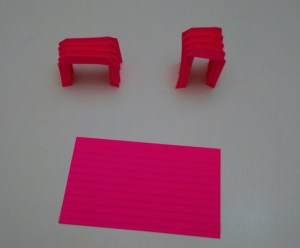
In this example I used two standard 3″x5″ cards folded with accordion pleats. How many books do you think one card can hold up?


img_4239 img_4240 img_4241 img_4242


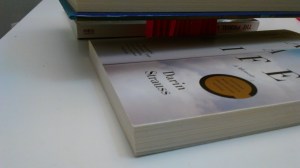
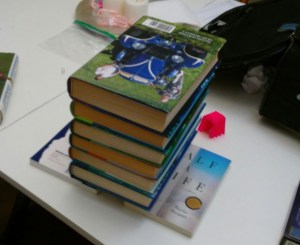
Notice I placed two smaller books on the sides to prevent the paper from sliding outward. The cards still support the entire weight of the books.


img_4233 img_4233 img_4244


You can see that the larger books are resting on the cards and not the smaller books.


img_4246 img_4235 img_4235 img_4236 img_4238 img_4245 img_4243


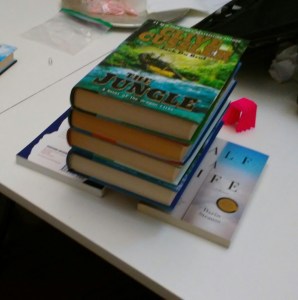
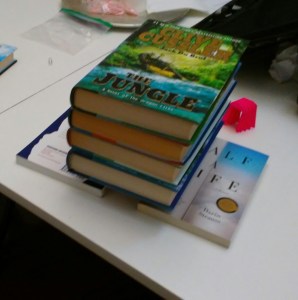
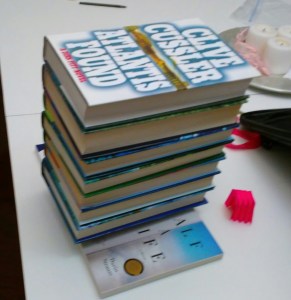
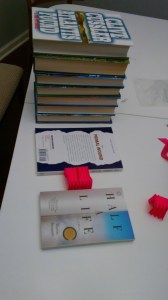
In total, the cards were able to support the weight of seven large books. When weighed, that equals 10 lbs. Who would have thought a tiny 3″x5″ card could support so much weight?


When used in weight bearing applications the paper is sandwiched between an outer frame that keeps the sides from slipping out yet still allowing the internal paper to support the weight.

Keep your ears and eyes open to hear and see many of these origami principles being used in the news. More and more people are realizing that origami is not just a kid’s hobby. Did you know that many of the most famous scientists experimented with origami? Other notables were famous authors, musicians, magicians, doctors, architects, and more. Why not do a little research about the history of origami? It is very interesting.

Big Bird, Great Bird! The Blue Heron

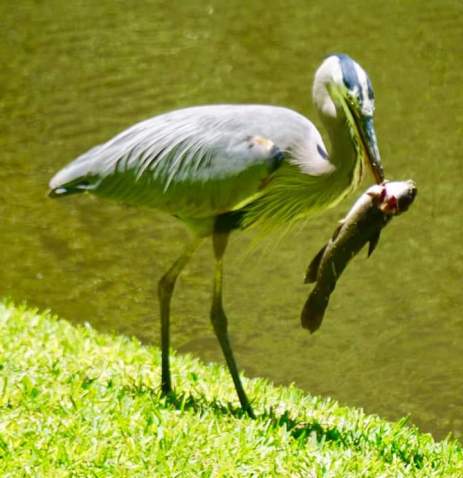
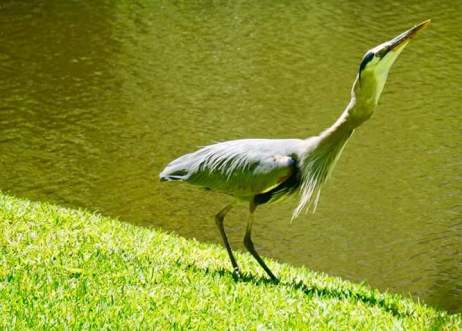
One night while fishing for catfish, out on the end of the pier, I was startled by a huge bird landing right next to me. Not only was I startled, but the bird gave out a loud squawk when it realized it was not alone. The bird rustled its wings and gave flight rising like a large Pteradactyl. It flew just a short distance away and landed near the shore about 100 feet away. Throughout the night we both kept an eye on one another. Though I caught larger fish he was content to spear the shiner minnows swimming near the surface in the moonlight. He also caught a larger bluegill when it wandered too close chasing the shiners.The heron is a very patient fisherman. He stood in the shallow water on his long stilt-like legs. He kept his long neck in an S shape. By doing this he had a springlike reaction when he jabbed his spear, his long beak, into the water. Once he caught a fish he would often squeeze it several times in its beak while flipping it up to a point where it could swallow it.
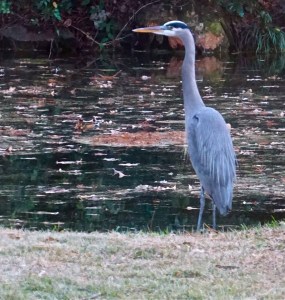
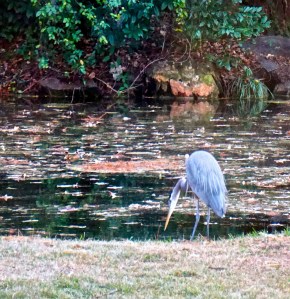
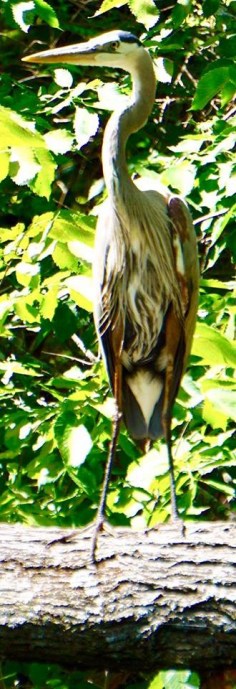
img_4202  img_4204

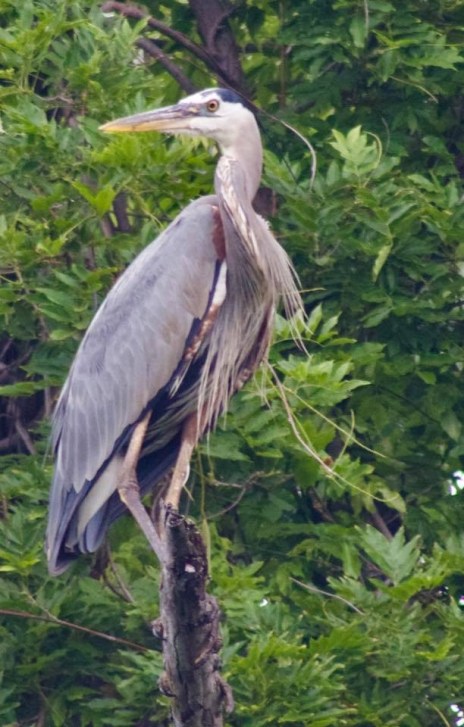
These pictures were taken at my son’s house in Texas. He really captured the colors of these majestic birds well.
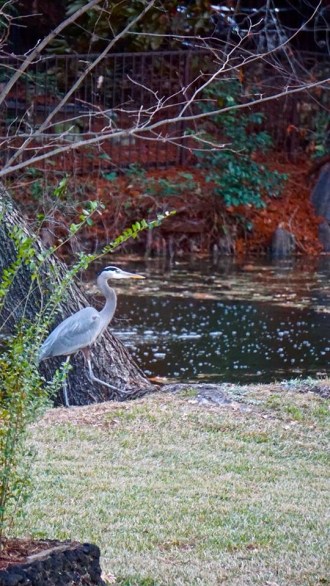
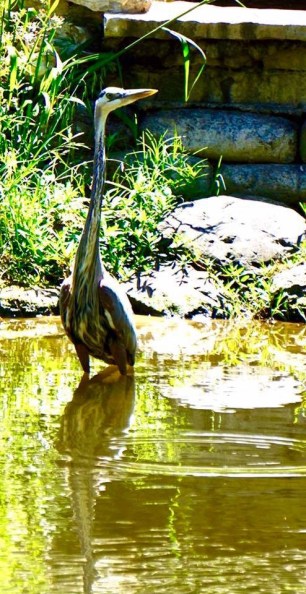
 

img_4203


I once lived on a ranch in Northern California near Clearlake. On the ranch we had two small ponds full of fish. The pond on the front of the property had hundreds of small catfish in it. I observed that the herons there were specialist in removing the organs from inside the fish. They left the rest of the spiny small fish on the shore for other creatures to feed on. I have never seen this behavior anywhere else. Usually they eat the whole fish in one big gulp.

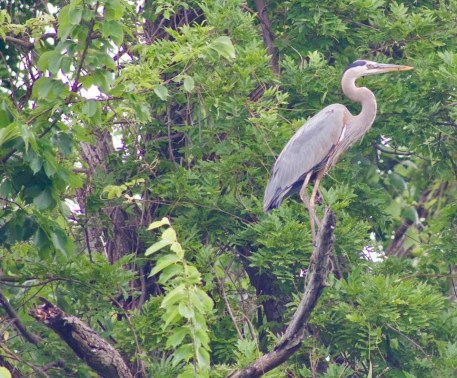
Did you know these birds are about 4 feet high and have a wingspan of about 6 ft. They usually hunt alone by spreading out around the waterways where they feed. They do, however, enjoy nesting in large groups which adds extra protection by adding a lot of eyes to keep watch on potential threats to their eggs and young. Interestingly, the daddy herons gather the sticks for the nest building but leave the construction of the nest to the mother. The nests are huge and can be found in the tops of trees near the shore. Both parents help in feeding the young. The parents catch and eat fish and then regurgitate it for the babies so it is easier for them to digest. Doesn’t sound pleasant to me, but I’m not a heron. It takes a lot of feeding to raise the young. There are usually around five or six of them in the group. Many enemies can snatch the young if the parents aren’t watchful. These include: crows, ravens, raccoons, hawks, eagles, bears and snakes. The parents take their responsibility to care for the young seriously. The males spend about 10 and a half hours on the nest while the eggs are incubating. The females spend the rest of the time. Once hatched a parent is usually nearby while the other parent is hunting food.

Interestingly, fish is not the only thing on the menu. They also eat small rodents like mice, gophers and voles, frogs, snakes, insects, baby turtles, as well as other smaller birds.

After about 80 days the young are ready to leave the nest to fend for themselves.

The scientific name of the Great Blue Heron is Arden  herodias.


Heron Catching and Eating a Catfish:
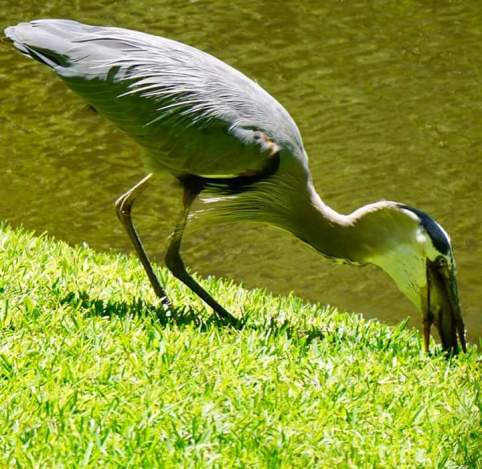
I can’t help but be amazed at how much care God put into designing these birds and giving them the ability to catch their own food and build huge nests out of sticks. He provided everything they would need to survive and help maintain the balance of the ecosystems where they live. If He cares for them, He surely is able to care for us.

More Pictures Around Spring Lake:
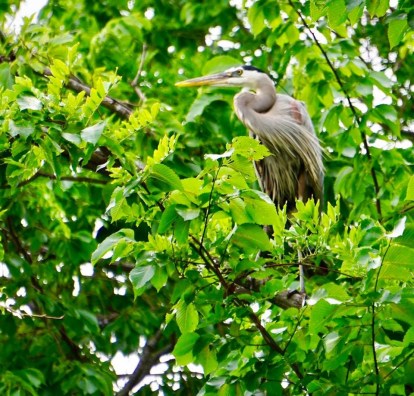


Another Beautiful Blue Heron:

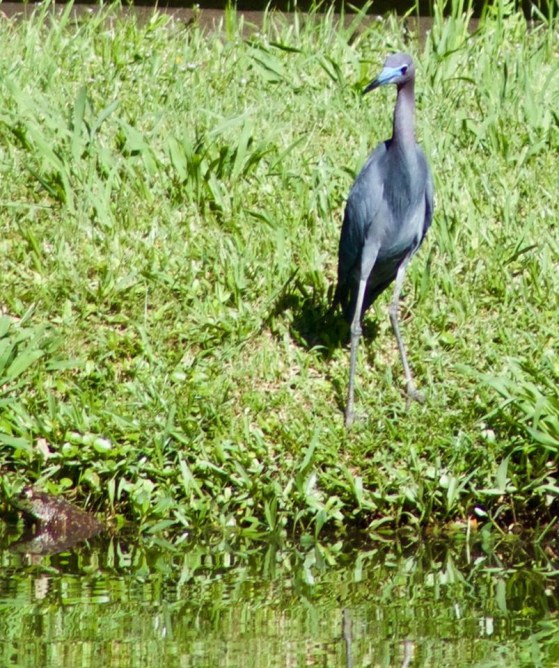
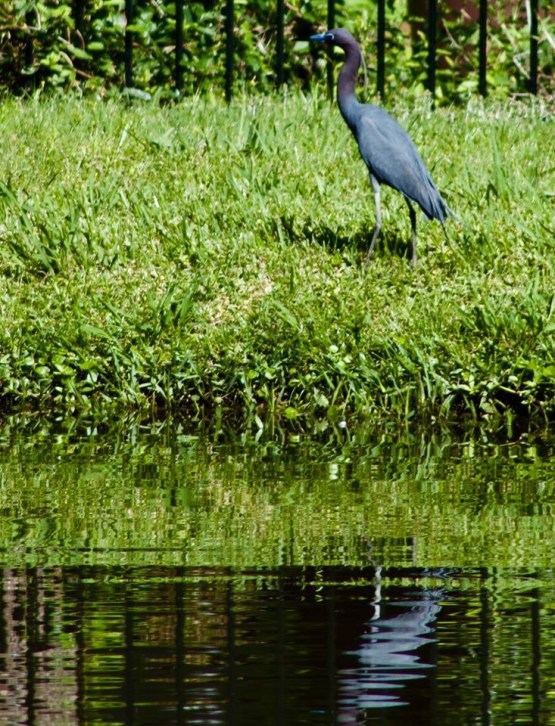
Another near relative of the Great Blue Heron is the Little Blue Heron. It has a more purplish hue and more vivid light blue on its face. Below are a couple pictures of these birds capture in pictures at the same place as the Big Blue above. Notice the Bull Frog that the bird is eyeing. He better watch out or he will become lunch!
If you want to learn more about herons, you can do research by reading about them. More fun, however, is to spend some time out watching them for a few hours. Take a pair of good binoculars and you can see a lot more of the action. Be prepared, however, to wait patiently. Why not take a fishing pole along and do some fishing while you wait. See if you can out-fish the amazing herons. 
Blessed Bees

Some of the most important creatures that benefit man are the bees. Besides the honey that they produce, what other benefits do we get from the bees? What lessons can we learn about these interesting creatures God created for us to enjoy?


Click below to open Powerpoint presentation. You can also open it in Keynote, if you have that app.

blessed-bees-chapel

Seahorse Roundup

Have you ever seen a seahorse? What kind of animal is it? Is it really a horse? Is it a fish? Read this blog post to find out many interesting things about these amazing little creatures God created for us to enjoy. They can teach us several important lessons about life.

Click below to see the Powerpoint presentation. You can also open it in Keynote, if you have that app.

seahorse-chapel

Is This Your Lucky Day? Four-leaf Clovers

When I was a kid my parents thought of a way to get us outdoors and entertained. At first their plan seemed like a win-win: kids outside and some time to spend  alone without us kids in the way. The plan was:” Go out and see if you can find a four leaf clover. If you do, I will give you a nickle for everyone you find. “ Sounded great to us (back then you could buy a lot of candy for a nickle). The thing was, it didn’t take us that long to find four leaf clovers. Pretty soon we were making a lot of money. We were finding more than they could ever imagine.

We also heard many people say, finding a four leaf clover would bring us good luck. Of course, in our childlike innocence we thought that was entirely possible, since we were making a profit from finding them. As we took time to consider the concept of “good luck”, over time we came to realize that finding four leaf clovers and having good luck was merely a myth. Reading God’s Word, we found out that the “rain falls on the just as well as the unjust”. The real deal was God’s providence.

While watching the presentation below, think about what that means. It’s not luck, it’s God’s providence.

If you would like to fold your own origami four-leaf clover go to the origami section of the blog for instructions.

is-this-your-lucky-day

Unit Origami Forms

  • These are a couple unit Origami folds that I have folded from models in books. The largest is composed of 30 units, all folded the in the same manner. These units can be combined into other forms like a 60 unit module. The two smaller spheres are made with different units. Each of these has 12 units. Using the same units you can make a variety of shapes. Using 6 units you can make a box. Many other forms are possible. This particular unit is one of the most sturdy units for construction. When you push on the outside of the spheres, once combined, they tighten almost like when you press on the outside of a snow ball. They hold together so tightly that you can play catch with them. The other units usually need a tiny dab of glue to keep them together for a more permanent display. There are many different units you can fold to make a wide variety of forms. Why not check out some of the unit Origami books at your library and give it a try?
  • img_4105

Insect Galls

Have you ever seen an oak ball? Is it a fruit of the oak tree or something else? Have you ever seen leaves with a bunch of swelled bubble on their edges. What causes these? Let’s take a few minutes to learn about insect galls.


Click below to see the presentation.


insect-galls-cf

The Mound Builders

the-mound-builders-thatching-ants-chapel

This is a presentation about Thatching Ants I encountered at my Brother-in-law’s house a few years ago. These amazing creatures have a lot o teach us, just as Solomon suggested years ago….”Go to the ant…..and learn of her ways.”

If you have the Keynote App you can open this file and watch it with progressive slides at a touch of the screen or keyboard.