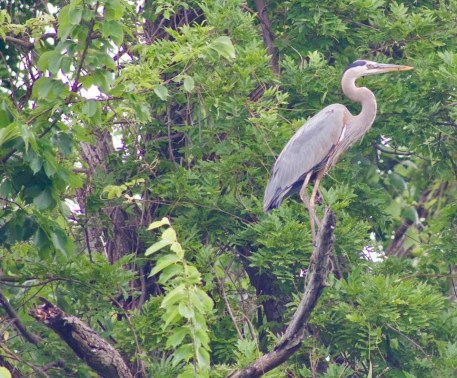
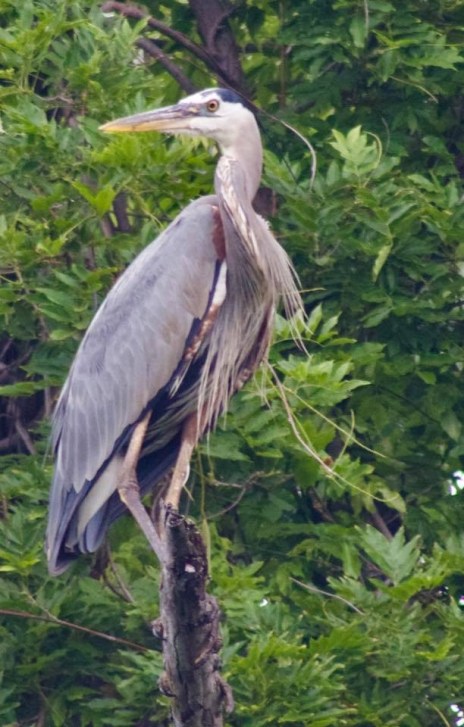
Big Bird, Great Bird! The Blue Heron

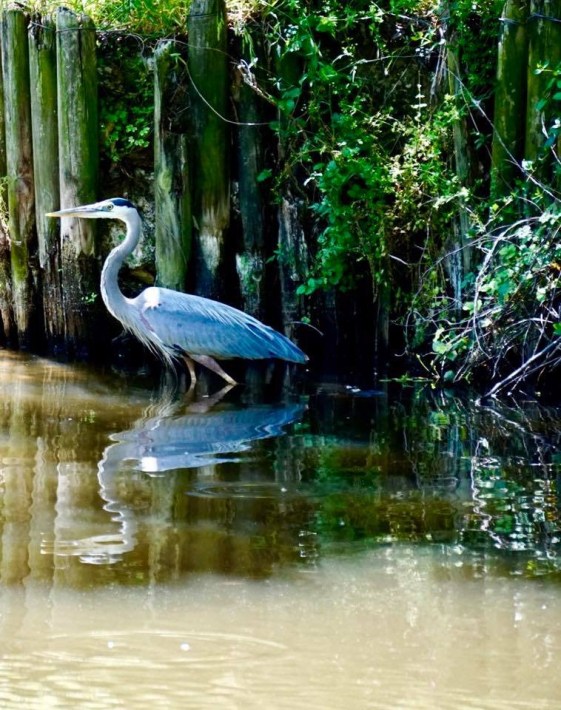
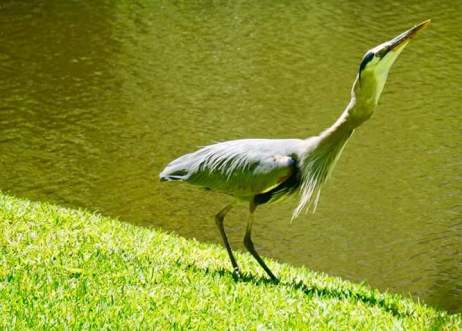
One night while fishing for catfish, out on the end of the pier, I was startled by a huge bird landing right next to me. Not only was I startled, but the bird gave out a loud squawk when it realized it was not alone. The bird rustled its wings and gave flight rising like a large Pteradactyl. It flew just a short distance away and landed near the shore about 100 feet away. Throughout the night we both kept an eye on one another. Though I caught larger fish he was content to spear the shiner minnows swimming near the surface in the moonlight. He also caught a larger bluegill when it wandered too close chasing the shiners.The heron is a very patient fisherman. He stood in the shallow water on his long stilt-like legs. He kept his long neck in an S shape. By doing this he had a springlike reaction when he jabbed his spear, his long beak, into the water. Once he caught a fish he would often squeeze it several times in its beak while flipping it up to a point where it could swallow it.
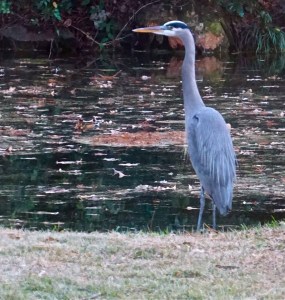
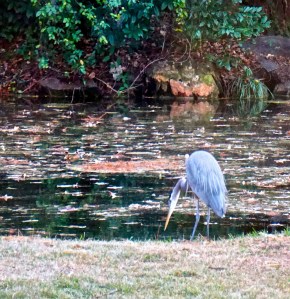
img_4202  img_4204

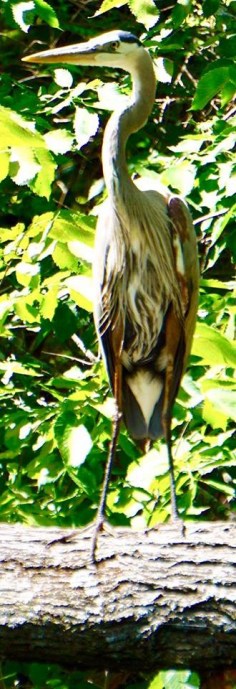
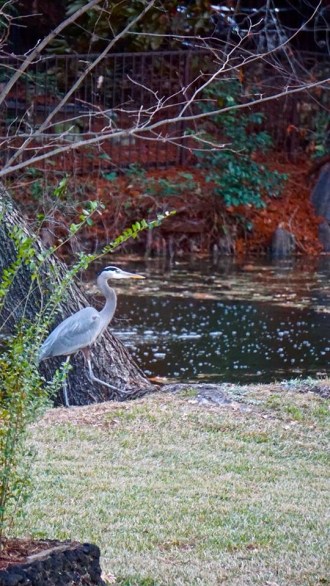
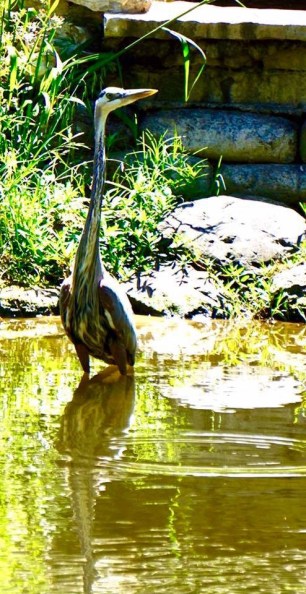
These pictures were taken at my son’s house in Texas. He really captured the colors of these majestic birds well.
 

img_4203


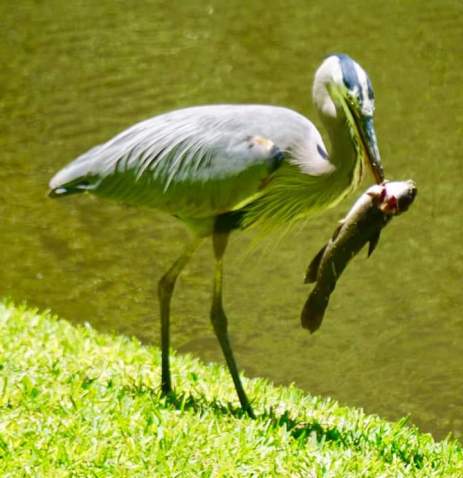
I once lived on a ranch in Northern California near Clearlake. On the ranch we had two small ponds full of fish. The pond on the front of the property had hundreds of small catfish in it. I observed that the herons there were specialist in removing the organs from inside the fish. They left the rest of the spiny small fish on the shore for other creatures to feed on. I have never seen this behavior anywhere else. Usually they eat the whole fish in one big gulp.

Did you know these birds are about 4 feet high and have a wingspan of about 6 ft. They usually hunt alone by spreading out around the waterways where they feed. They do, however, enjoy nesting in large groups which adds extra protection by adding a lot of eyes to keep watch on potential threats to their eggs and young. Interestingly, the daddy herons gather the sticks for the nest building but leave the construction of the nest to the mother. The nests are huge and can be found in the tops of trees near the shore. Both parents help in feeding the young. The parents catch and eat fish and then regurgitate it for the babies so it is easier for them to digest. Doesn’t sound pleasant to me, but I’m not a heron. It takes a lot of feeding to raise the young. There are usually around five or six of them in the group. Many enemies can snatch the young if the parents aren’t watchful. These include: crows, ravens, raccoons, hawks, eagles, bears and snakes. The parents take their responsibility to care for the young seriously. The males spend about 10 and a half hours on the nest while the eggs are incubating. The females spend the rest of the time. Once hatched a parent is usually nearby while the other parent is hunting food.

Interestingly, fish is not the only thing on the menu. They also eat small rodents like mice, gophers and voles, frogs, snakes, insects, baby turtles, as well as other smaller birds.

After about 80 days the young are ready to leave the nest to fend for themselves.

The scientific name of the Great Blue Heron is Arden  herodias.


Heron Catching and Eating a Catfish:
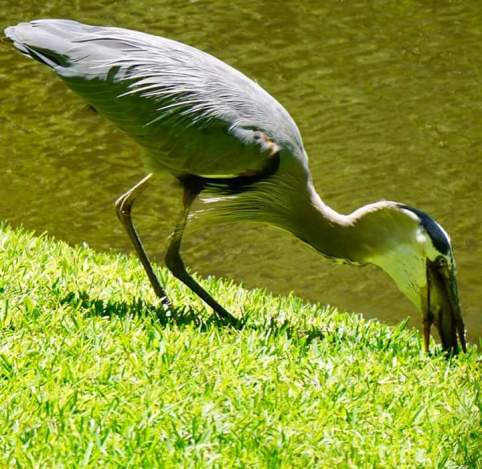
I can’t help but be amazed at how much care God put into designing these birds and giving them the ability to catch their own food and build huge nests out of sticks. He provided everything they would need to survive and help maintain the balance of the ecosystems where they live. If He cares for them, He surely is able to care for us.

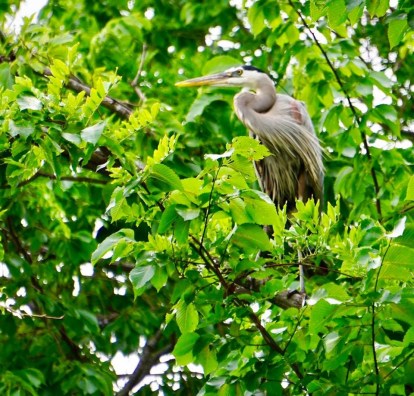
More Pictures Around Spring Lake:


Another Beautiful Blue Heron:

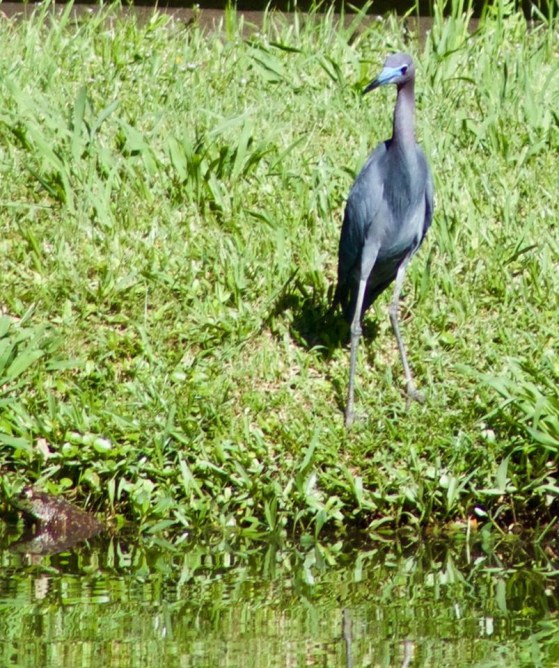
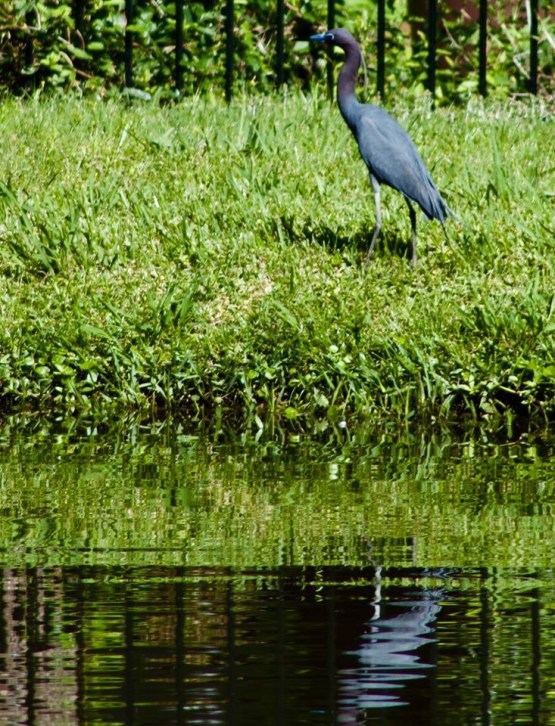
Another near relative of the Great Blue Heron is the Little Blue Heron. It has a more purplish hue and more vivid light blue on its face. Below are a couple pictures of these birds capture in pictures at the same place as the Big Blue above. Notice the Bull Frog that the bird is eyeing. He better watch out or he will become lunch!
If you want to learn more about herons, you can do research by reading about them. More fun, however, is to spend some time out watching them for a few hours. Take a pair of good binoculars and you can see a lot more of the action. Be prepared, however, to wait patiently. Why not take a fishing pole along and do some fishing while you wait. See if you can out-fish the amazing herons. 
Blessed Bees

Some of the most important creatures that benefit man are the bees. Besides the honey that they produce, what other benefits do we get from the bees? What lessons can we learn about these interesting creatures God created for us to enjoy?


Click below to open Powerpoint presentation. You can also open it in Keynote, if you have that app.

blessed-bees-chapel

Four Lessons From the Plant World

Have you ever noticed how many times the Bible refers to plants to teach us important lessons? In this presentation we will learn about some plants and how they can help us remember some important truths from God’s Word. Hope you enjoy this presentation.


Click below to open the Powerpoint presentation. You can also open it in Keynote, if you have that app. four-lessons-from-the-plant-world-chapel

Seahorse Roundup

Have you ever seen a seahorse? What kind of animal is it? Is it really a horse? Is it a fish? Read this blog post to find out many interesting things about these amazing little creatures God created for us to enjoy. They can teach us several important lessons about life.

Click below to see the Powerpoint presentation. You can also open it in Keynote, if you have that app.

seahorse-chapel

Where the Buffalo Roam

This post uses the Buffalo as an example to teach us several Biblical principles of living the Christian life. What do you know about these amazing animals? Have you ever been to Yellowstone National Park? If so, you probably encountered these large wild animals.


Click below to see the Powerpoint presentation. You can also open it in Keynote, if you have that app.


where-the-buffalo-roam

Is This Your Lucky Day? Four-leaf Clovers

When I was a kid my parents thought of a way to get us outdoors and entertained. At first their plan seemed like a win-win: kids outside and some time to spend  alone without us kids in the way. The plan was:” Go out and see if you can find a four leaf clover. If you do, I will give you a nickle for everyone you find. “ Sounded great to us (back then you could buy a lot of candy for a nickle). The thing was, it didn’t take us that long to find four leaf clovers. Pretty soon we were making a lot of money. We were finding more than they could ever imagine.

We also heard many people say, finding a four leaf clover would bring us good luck. Of course, in our childlike innocence we thought that was entirely possible, since we were making a profit from finding them. As we took time to consider the concept of “good luck”, over time we came to realize that finding four leaf clovers and having good luck was merely a myth. Reading God’s Word, we found out that the “rain falls on the just as well as the unjust”. The real deal was God’s providence.

While watching the presentation below, think about what that means. It’s not luck, it’s God’s providence.

If you would like to fold your own origami four-leaf clover go to the origami section of the blog for instructions.

is-this-your-lucky-day

Milkweed Beetles

When walking along the creek and ditches in Idaho I came across these amazing insects. They are so beautiful glistening in the sun. As I researched to find out more about them and watched them for quite some time I learned a lot. I hope you enjoy learning about them too. While reading, consider how they came to have all of these behaviors and characteristics. Looks like design to me. How about you?

Click below to watch this presentation. You can also open it in Keynote, if you have that app.


milkweed-beetles

Leaping Leopard Frogs

One day at school, the high school Biology teacher came over and said, “Do you want some frogs for your Creature Feature?” Apparently he had purchased frogs for dissection and they were supposed to be dead and preserved. I decided it would be fun to learn more about the Leopard Frogs and watch how they behaved compared to the Bullfrogs I was most familiar. There were a lot of fun things to learn. In this presentation I will share a few of the things I learned and show you several pictures of these unique creations.


leopard-frogs-creature-feature

Catching a Limit of Trout

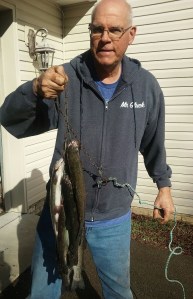
Just came back from fishing in the creek. Caught a limit of trout (7) in 45 minutes. I was in the right spot at the right time. Just after I arrived and claimed my spot on the shore, in rode the fish and game truck. The officer on the bank told me that they had placed 350 trout in the creek in this planting. Worms seemed to do the trick. Only lost one due to slippy skin. Right after this loss I caught a replacement and that made a limit.

What a beautiful fish species. They have so much color when they first emerge from the water. God used a great color pallet when designing the trout. One of the best tasting fish, it is also easy to clean. All you do is cut a slit up the belly from the vent to the head. Cut off the head and pull out the guts. After this, run your finger inside the body cavity up along the inside of the backbone to remove the blood line there. Rinse out the inside and outside of the fish and you have a fish ready to cook.  Some people like to leave the head on to make the fish look bigger. Either way, the fish will taste good fried up.

Check out the planting schedules from the Department of Fish and Game in your area. Prepare all the gear ahead of time including bait. Find out which baits work best in your locale by asking other fishermen on the bank or just watch and see what they are using.img_4083

Dissolving Mushrooms: The Shaggy Mane Mushrooms

One of my favorite hobbies is hunting for mushrooms. I developed this interest while taking a field biology class when teaching in Redwood Valley, Ca. Though mushrooms can be very tasty, I do not recommend that you eat them unless you know for sure what they are. This usually requires an expert who has harvested them before. Even if you don’t eat them, mushrooms can be very interesting and are an important part of the environment. They help us in many ways. Some, however, can be harmful. Why not do some research and find out more about these amazing creations of God?

Click below to open presentation.  If you have the Keynote app. you can open it in it and see the progression of slides.


shaggy-mane-mushrooms

Amazing Microbes

In this presentation you will learn about some extremely small creatures that God has designed to live where other creatures could not. How are they helpful to us? Where can you find them?

These pictures were taken in Yellowstone National Park. Enjoy!amazing-microbes


You can also open the above presentation in Keynote if you have that app. It will allow you to hear the sound effects and see the progression of the slides.