Catching and Eating Trout
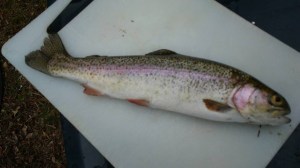
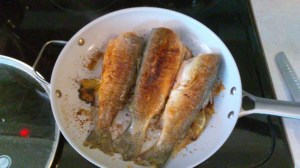
One of my favorite fish to catch is the trout. These amazing fish are good to eat and put up a fantastic fight. Let me share some of the fish I’ve caught and eaten. See how to prepare them for the table.

One of my favorite fish to catch is the trout. These amazing fish are good to eat and put up a fantastic fight. Let me share some of the fish I’ve caught and eaten. See how to prepare them for the table.

Have you ever watched a flamingo? These strange birds have several unusual behaviors. They can teach us lessons about how to live our lives in a manner to please the LORD. Check out these pictures I took at the Sacramento Zoo in California.
What Can We Learn From the Sea Anemones?
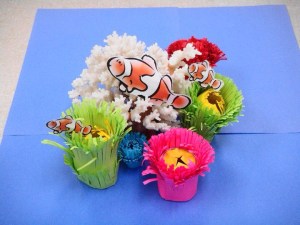
Have you ever been at the seaside and played in a tide pool? If so you have probably encountered some of these amazing animals, the sea anemones. This Power-Point presentation was a chapel I presented to several elementary students at a school in Carmichael, California. Hope you enjoy it too.

If you have a Keynote App you can open this presentation with progressive motions.
the-mound-builders-thatching-ants-chapel
This is a presentation about Thatching Ants I encountered at my Brother-in-law’s house a few years ago. These amazing creatures have a lot o teach us, just as Solomon suggested years ago….”Go to the ant…..and learn of her ways.”
If you have the Keynote App you can open this file and watch it with progressive slides at a touch of the screen or keyboard.
Alex the Tortoise
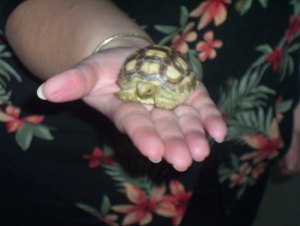
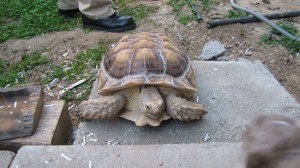
Here are a couple more pictures of the tortoise I am holding in the other section of the blog. His name is Alex. Here is a picture of him when he was a baby. He is now probably too big to pick up. He likes to eat vegetables. He has his own house in the backyard of my friend’s house in Sacramento.


What was your first experience with worms? Was it putting a worm on a fishhook or watching your dad do it for you? Was it while digging in the garden area to plant some seeds? Was it right after a rain storm when the worms went crawling across the sidewalk? Where ever it was it was probably a memorable experience. Yet after that first time we often take the lowly worms for granted. Just how important are these little creatures to our well being and that of the environment? Let’s take a closer look and see what we can learn.
Waste Not!
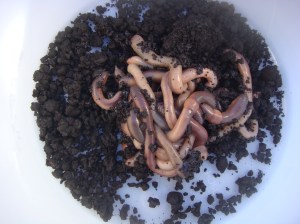
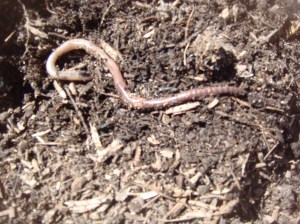
When looking for examples of waste management, you don’t have to look farther than the ground. There, with a few scoops of a shovel, you will probably find the lowly earthworms, God’s recycle agents.
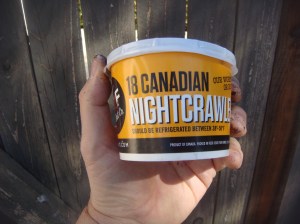
Earthworms are so important to the environment, yet go mostly unseen by those who enjoy the benefits of their work. This is most likely due to the fact that they do most of their work at night while we are sleeping. They don’t call them “Night Crawlers” for nothing! Did you know that the earthworms, in just a single acre of land, can turn over as much as 90 metric tons (one hundred tons) of soil in a single year? Wow! That’s an earth-moving fact! If worms did not do this, we would be buried in tons of dead and decaying plant material. The soil would not be able to provide the necessary nutrients for our crops, animals would go without food. But that;s not all!
FOOD AND WATER CONTROL
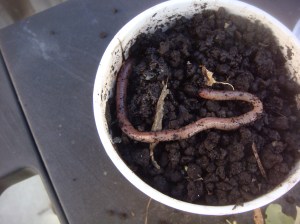
Did you know that if the earthworms did not loosen the soil and break it up and drill it with tunnels, the water from rainstorms would quickly just run over the soil and not be able to enter the ground. If this happened, just think how much fast- moving water would cause erosion and damage. We would not have adequate water when we needed it in the summer because it would have all evaporated or run down to the sea.
TOP SOIL RENEWAL
Earthworms are responsible for replenishing the top soil. They actually eat the dirt as they tunnel. They can eat up to twice their body weight per day. Since they have no teeth to chew up what comes into their mouths, they must have another way to process the bigger pieces. Do you know what it is?
HOW ARE EARTHWORMS LIKE DUCKS?
In order to process the food, worms use their gizzards. Yes, earthworms, like ducks and other birds, have gizzards. The gizzard is found just behind a part of their digestive tract known as the “crop”. The crop acts a lot like our stomachs. It holds the food until it is ready to be further broken down. The gizzard contains small pieces of rock which are harder than the soil being processed. As the muscle walls of the gizzard move in and out the rocks break up the soil, releasing nutrients and making it easier for the soil to pass through the rest of the worm’s body. The soil is loosened and injected with one of the best fertilizers known to man, worm castings. If you look around the top of the wormhole you can see the little ring of lighter colored dirt. These are the worm castings. You can actually buy worm castings at the gardening center to improve your soil.
MAKE MY GARDEN GROW!
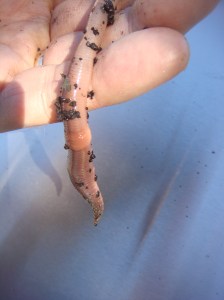
LET’S GO FISHING!
In what other ways do worms help you? Well, you all know where most people experience their first worm in hand…..or Daddy’s hand……Fishing! Yes, worms make up a large part of the fishing industry. They are pretty effective in catching fish. What does that tell you? Fish and many other animals depend on worms for their food. When worms are washed out into the river, pond, or stream during a storm they do not go to waste. They are eaten. What other animals have you seen eating worms? Yes, birds!
Just watch a robin in the Spring for a few minutes and you will probably see her pull up a large, juicy worm for her breakfast or to feed her young. Many other creatures, including man, eat worms.
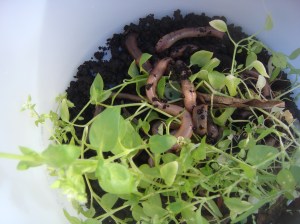
DID YOU KNOW?
Many people make money raising worms.
Some worms live at elevations of 10,000 ft.
Some live in some of the coldest regions of the earth like Siberia and some of the islands near Antarctica.
Some worms in Australia grow up to 12 ft. long and weigh up to one and a half pounds.
DEFENSE
Though worms are captured by other animals, they are not completely defenseless. Earthworms are equipped with some amazing grippers. These little bristles are found on the back end of the worm. They are like tiny anchors gripping to the sides of the holes in which the worm is hiding. At night, when they come out of their holes to grab leaves and other food items, they keep their back ends in the ground. They are very sensitive to vibrations and quickly pull down in their holes if you approach them with heavy feet. However, if you sneak up quietly, you can reach down and grab the worm and try to pull it out before it notices. It, however, will probably grab unto the dirt in the bottom of the hole and hold on for dear life. If you pull too hard you will only get the front end of the worm. If your want to get the whole worm, you have to be smarter than a worm. To do this you hold on to the worm and squeeze the little ring around its head end. This usually causes the worm to release its bristles and you can slowly pull it out of the ground. Some worms even have offensive weapons to use against their attackers. Some contain chemicals that taste bad or are irritating to the linings of the mouths of their enemies. If bitten, the worm excretes these fluids and the attacker releases it.
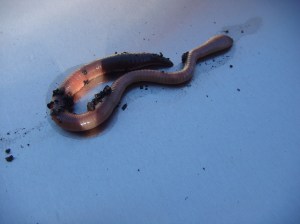
DON’T USE WORMS AS A WEAPON!
Though worms can be very useful in their proper places they can also cause problems when released in places where they are not native. Mankind has often messed up this balance by moving one kind of worm to a different location where it does not naturally belong. This causes a great deal of change in the food chains and soil chemistry of the area. It is important to remember not to release the worms you get at the bait shop back into the soil when you are fishing with them (unless you dug them yourself in that area.) They may be a totally foreign species to your area and can displace the native populations or be a flavor of worm that the animals in your area cannot digest. You can, however, take the remaining worms and raise them in a box of soil and start your own bait source for future fishing trips.
WORMS IN THE KITCHEN?
Did you know many people have a bin of worms under their sinks in their kitchens or at the offices where they work? Even some schools have a bin of worms. Why do they do this?
One pound of worms can recycle up to 2 lbs. of waste in one week. They eat newspaper, banana peels, apple cores, the parts of fruits and veggies we throw away, cardboard boxes, egg shells, and many other organic substances. They turn it into compost which can then be used in gardening both in and out of doors. The worms will also reproduce and create more worms to use or sell.
Using worms to break down and process waste is called “vermi-composting”. Raising worms is called “vermi-culture”.
Did you know that one pound of red-worms can cost from $20 to $40? That’s money in the bank unless you are buying them. You could quickly regain your investment from the materials they produce: compost and worm- castings, which can be sold to gardeners or used in your own vegetable garden. You can also get a lot of new worms to make new composting bins or for fishing.
CATCHING NIGHT CRAWLERS
Take a flashlight and go out late at night to see if you can catch the night crawlers out of their holes on your lawn. It seems to work best when the lawn is moist after watering in the day or a rainstorm. Sneak up slowly or they will dive back into their holes in the grass. They are gathering leaves and grass scraps to take back underground to digest. Look around your yard in the day time to see the worm-casting rings around their holes. This will help you find them when it gets dark.
MORE FUN WORM FACTS:
Earthworms are cold-blooded animals.
Earthworms are “Hermaphrodites”: They are both female and male at the same time.
Worms have no eyes.
Earthworms have 5 hearts.
Earthworms lay eggs called “cocoons” from which the babies emerge.
The bristles on the Earthworm are called “Setae”.
There can be over one million worms in one acre of land.
The ring around the collar of the Earthworm is called the “Clitellum”.
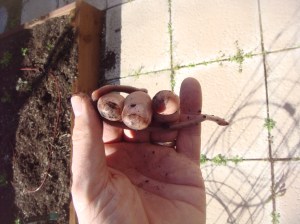
TAKE THIS QUIZ TO SEE HOW MUCH YOU HAVE LEARNED:
Answers: 1. T, 2. F, 3. C, 4. D, 5. T, 6. C
One day I went out to see what I could discover down at the waterway near our house where we used to live in Sacramento, out near the airport. As I walked along the shore I noticed signs of an animal that ate crayfish. I suddenly heard a humming sound and looked out in the water to see this playful otter. I decided to mimic its sound and see what happened. This is the result.
After watching this otter I did some research and found out that its scientific name is Lontra canadensis, the North American River Otter. These intelligent and playful animals were once hunted and trapped for their fur. They spend their days hunting for fish, shellfish, small mammals and bird eggs. This otter seemed to enjoy the taste of crayfish which it found to be plentiful in the backwaters of the American River. I have also encountered otters at U.C. Davis along the creek that runs through the park area behind the campus. Otters travel around a lot looking for new places to feed. If the waterways are connected or nearby, the otters travel to and from a number of locations to find the best sources of food. It’s a rare treat to be able to watch an otter this close and have it stay around long enough to film it.
When I watched this otter playing I was reminded of how awesome our God is to have created so many interesting and different animals with so many varied behaviors. He must have wanted to create an animal that would bring a lot of joy and laughter to those who watched it play. Otters are important in the environment because they help regulate other animals that could overrun the area. By eating many of the animals that reproduce vast numbers of offspring, the otter allows for there to be a balance so there is enough food to go around for all the animals in the area. If just one animal species is removed from an area it can cause a lot of problems for the others. God designed animals to live in certain habitats and gave them a hunger for certain kinds of foods so not all animals would eat the same thing.
One interesting thing I learned about otters is how they mark their territories. In the video you saw how the otter decided to leave its “calling card” on the bank. This otter “poop” actually has a name and a purpose. It is called “spraint” and it has a distinctive smell. It tells other otters and animals to stay away. “This area is mine!” Other otters can actually tell a lot about the otter that left the spraint on the shore by its smell. Scientists believe that from its smell they can tell whether it was a male or female, how old it is, and many other things. If you find a pile of spraint on the shore you know an otter is either nearby or has recently been there. Since otters eat up to 15% of their weight every day you can bet there is a lot of spraint left behind!
An amazing otter fact has to do with their fur. Did you know otters can have up to one million hairs per square inch? They actually have two layers of hairs: an undercoat and then the longer hairs you see on the outside as they swim by. The hairs nearest the body allow air to be trapped to keep the otter warm as well as to add buoyancy so it can float more easily.
Otters are also tool users. An otter can grab a rock from from its surroundings and use it to crush open hard shelled animals so they can get at the meat inside. They can actually store the rock in the skin under their arms until needed. Sometimes they seem to just play with things they find in the water, kind of like when we play catch or tag.
Fun Otter Facts:
A family of otters in the water is often called a “raft”.
The same family on land is called a “romp”.
Otters often build slides along the shore to enter the water more quickly.
In Bangladesh, otters are used by fishermen to catch fish. The fishermen train the otters to hunt for, catch and chase fish into nets. The fishermen then allow the otters to eat some of their catch.
Scientists who spend a lot of time studying otters have discovered that they have 22 distinct noises they make to communicate. One of the most notable is a “hum”, which you might hear in the video.
Did you notice how the otter responded when I started making clicking and bird sounds at the end of the video? Apparently this otter preferred the humming sound.
OTTER QUIZ Let’s see how much you have learned.
1. A family of otters on land is called a “romp”. T F
2. Otters can tell whether another otter is a male or female from the sprint left on the shore. T F
3. A family of otters in the water is called a “boat”. T F
4. Scientists have discovered that otters can make 22 different sounds which they use in communication.
T F
5. Fishermen in Bangladesh actually train otters to fish for them. T F
6. Otter hairs can number up to a million hairs per square inch of their pelts. T F
7. The scientific name of the North American River Otter is:
A. “Ollie” the otter, B. “Sprains”, C. Lontra canadensis, D. None of the above
8. Otters have been known to use tools to open their food. T F
ANSWERS: 1. T, 2. T, 3. F (it’s a raft), 4. T, 5. T, 6. T, 7. C, 8. T
How did you do?
This presentation is about a plague of crickets I encountered on a trip to Idaho from California.
If you have the Keynote App you can open this presentation by taping the middle of the first frame and then linking to Keynote with the icon in the top right hand corner. You will then add the movement and any sounds that are in the presentation frame by frame as you tap the screen.
Tap below to open.
This is about an amazing insect that can teach us a lot about God’s plan for our lives. It is one I discovered in Idaho a few years ago when we traveled there for the 4th of July picnic at the farm in Kuna, Idaho. I think you will enjoy learning about this unique creature.
the-great-pretenders PowerPoint
You can also open this presentation in the Keynote App, if you have it, by touching the middle of the first frame. In the top right hand corner you will see a note to tie you to Keynote. Once open, you can watch the presentation “with all the bells and whistles.”

How many of you have a favorite Christmas ornament? Think of how it looks and what it represents. I have several ornaments that mean a lot to me. Some of them are special because of who gave them to me. Others are favorites because of what they represent or how unique they are in design. Some are neat because of the materials used in the construction of the ornament.
Today, I am going to make an origami Christmas ornament. It is actually modeled after an ornament the Lord Jesus designed when He created the world and everything in it. This model is one I designed after the better design of Jesus. It not only is fun because it is made out of ordinary white paper, but also because of what it represents. Its pattern is neat, also.
Watch as I fold this project. I’m going to read several Scripture passages, which talk about this ornament as I work. Listen carefully so that you can share the message of God’s Word with others this Christmas time.
Way back in the Old Testament, a man named Job was talking with God, when God asked him a question. It is a very interesting question. Before I read you the question God asked him, we need to know a little bit about the circumstances Job was in when God talked with him. Job, as you probably know, had more problems than anyone else in the Bible. He lost all his wealth, his children, and his health all in the matter of a few days. He actually was under the direct attack of Satan when this happened. On top of these problems, Job’s friends tried to tell him that all his problems were because he was not right with God. What a terrible place to be in!
Well, after all this hard stuff happened, God came to Job and wanted him to know He was still in charge, that He loved Job, and knew his problems and could fix them. He then asked Job this question: “Job… Have you ever entered into the treasures (storehouses) of the snow..?” (Job 38:22). That seems like a funny question to ask him at that time, doesn’t it? But God knew what He was talking about. The storehouse of the snow is composed of what? Yes, snowflakes. I’m making a snowflake ornament.
What are some of the things we can learn about God from the snowflakes He created? First, we notice that almost every single snowflake is different yet it follows a similar pattern. God takes great care in the forming of every snowflake. Each one shows His power and majesty. It also shows us that God cares about little details and little things as well as the big things.
We can also look at what the Bible says about snow. Did you know It uses snow as a picture of God’s cleansing from sin? Listen to this neat verse from Isaiah 1:18: “‘Come now, let us reason together,’ says the Lord. ‘Though your sins be as scarlet, they shall be as white as snow; though they be red like crimson, they shall be as wool.’”
Wow, just think of the color red! It stands out like a sore thumb and screams, “Look at me!” Our sins do the same thing. They show us and everybody else that we are not good enough to meet God’s standard of perfection, holiness, and purity. We can’t make it on our own. We need our sin to be removed in order for us to be able to come into the presence of a holy God. Jesus’ blood, RED, was shed to cover our sins, to pay the price, to remove our sins. We are pure (WHITE) because of His sacrifice.
If you look carefully at a snowflake, under a microscope, you would find a piece of dirt or dust in the center of every snowflake. It is called a “condensation nuclei.” While the dust or smoke particle is floating around in the air, the water vapor up there collects on it and then the cold air freezes around the dust particle and completely hides it. The result is a beautiful snowflake design. The snowflake falls and the dirt particle is removed from the air. The snow falls on the ground and covers everything to make it look so beautiful and pure.
Remember King David in the Old Testament? He also wrote about snow. He said this to God in one of his prayers, “…Now wash me and I shall be whiter than snow…” (Psalm 51:7b).
He wasn’t asking God to throw him into the bathtub. He was confessing his sin and he knew that only God could cleanse his heart. We also can have our hearts cleaned when we do the same thing. First John 1:9 says, “If we confess our sins, He is faithful to forgive us our sins and cleanse us from all unrighteousness.”
If you are feeling dirty because of the wrong things you have done, ask God to forgive you. Tell Him what you did wrong and agree with Him that it is wrong. Turn from it and He will forgive you and cleanse you. Wow, that’s neat. It’s just like waking up in the morning and finding the ground covered with pure, white snow. We are all clean and fresh.
Snow is neat in many other ways. As you know, it’s fun to play in, ski on, ride sleds over, and it provides us with a way to store the water until we need it in the spring and summer. We should thank God every time we see the snow for His grace and mercy and the blessings we have because of His creation.
The next time you see a snow scene, and I’m sure you will see many over the Christmas holidays, think about your life and how God has cleaned you up and made you pure so that you can fellowship with Him and go to Heaven in the future. If you take the time to think about it and study about the snow, I bet you can find out many other amazing things about these little jewels of ice.
Here is a variation that makes an attractive ornament:

To make these just start with two-sided paper with contrasting colors. Fold and glue the same way as the Snowflake.