“If It Quacks Like A Duck” …What If It Doesn’t Quack? Can It Be A Duck?


Have you you ever seen a duck like these? I had not until my son sent me some pictures of these strange birds. Apparently you have to be in the Southern- most part of the United States to see them. These ducks were photographed in Texas feeding in the lawn next to a lake. They often go unseen in the areas where they live because they do most of their feeding at night. You will probably hear them before you see them, however. They are very loud. Don’t expect to hear quacking! They aren’t called “Whistling Ducks” for nothing. These are Black-Bellied Whistling Ducks. They are more similar to the swans in behavior than the ducks you and I are most familiar. So how are they different?

Black-Bellied Whistling ducks spend more time on the ground than in the water. They also are monogamous: they mate for life with just one partner. They, in addition, are difficult to tell  apart by gender since both the females and the males look alike, which is quite different than other ducks. They usually nest in trees or other high structures that offer cavities for the eggs to be placed. If you look at them closely you will notice they have much longer legs than other ducks. These ducks usually stay in the same areas throughout the year. Though they might move around within that space, they really don’t migrate.

Some other interesting things about these ducks is how they often practice “egg dumping“. What does that mean? The females occasionally  sneak into another Whistling Duck’s nesting area and dump the eggs already there and replace them with their own eggs. I guess this is a sneaky way out of having to feed the ducklings when they arrive. These ducks eat mostly plant material being primarily Herbivores. They often augment their diets with a little protein by consuming small aquatic insects, snails and spiders. They also may raid a farmer’s field to feed on rice and corn though usually this is after the primary harvest where they are actually serving as clean up duty for the remaining grain.

Black-Bellied Whistling Ducks have a number of natural enemies.These include animals that feed on their eggs like: raccoons, skunks, rat snakes, and bull snakes. Other animals prey on the baby ducklings including: Bass, catfish, gar, and even fire-ants. The adults are occasionally snatched up by great-horned owls.

These ducks are very colorful. Note their pink beaks, gray heads, black legs and chocolate brown wings. If you watch them in flight you will notice they have white wing patches which are mostly out of sight when on the ground.

So…if you are in Texas and if you hear a loud “Waa-Choo” whistling sound, you might find these ducks nearby. I can’t wait to return to my son’s house to observe them first-hand!


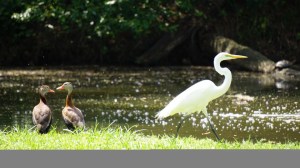
Here you see a pair sharing the shore with a Great Egret.


All of the above pictures were taken by Calvin Gluck in his yard inTexas. Thank you, Calvin.

Below are a couple pictures taken at the same lake by a neighbor of Calvin, Jamie. Thanks for letting me include them in my blog.


A Rarely Seen Creature: A Springtime Beauty!

While walking in Dogwood Canyon in Missouri this past week I discovered a creature I had never seen before. Apparently it is only seen in its adult stage in the months of March through May. It is often mistaken for a butterfly when it is actually a moth. It fooled me until I took a closer look. Let’s learn about the Grapevine epimenis.


Click below to open Powerpoint presentation. If you have the Keynote app, you can also open it there.


Diurnal Moth Grapevine epimenis

Can You Walk On Water? This Bug Can!

On a recent trip to Missouri I spent some time down by a creek. I had walked a mile up the canyon and my wife wanted to go farther. I decided to wait stream-side while she went farther up the trail. While sitting down by the edge of the water I noticed an interesting creature. This creature was actually standing on the water and streaking around like an ice skater on the surface. As I watched it, it went out and intercepted an insect that had been caught in the water surface tension. I continued to keep my eyes on this creature and watch what was going on in its surroundings. What an amazing creature God created for this very environment. Is it helpful or harmful? How is it uniquely designed to live where it is found? Let me tell you more about this insect called by many names: Water-Strider, Jesus Bug, Water- Skater, and more.


Click below to open Powerpoint presentation.  You can also open it in Keynote, if you have that app.


Can You Walk On Water

Turkey Time: Learn about a rare Turkey!

One day my grandchildren and my wife and I went out to a farm to visit a friend that had an amazing turkey. This turkey, I came to find out, was a rare bird…literally!  I hope you enjoy learning about this turkey and also, like me, come away amazed at God’s creativity in designing such an interesting bird. Enjoy!


Click below to open the Powerpoint presentation. If you have the Keynote app you can also open it in that.


turkey-time-chapel

Mossy Rose Galls: Something Strange in the Rose Garden

I was walking down by the stream one day and came across some interesting growths on the wild roses growing there. Of course, I had to investigate! Come to find out, these strange mossy looking balls were actually insect houses. The insects actually program the plant to make them grow these galls in various forms. I later open some and found inside tiny grubs which I found out were the larva of developing wasps. These wasps are not the ones you usually see, however, but tiny ones that usually go unnoticed unless you see their handiwork, these amazing structures.

Click below to open the Powerpoint presentation on these interesting creatures. If you have the Keynote app you can also open it in that.


mossy-rose-galls

Go Ahead and Stick Your Neck Out!

One of the amazing creatures that God created gives strong evidence of design. In order for this animal to exist it must have had all these design features in place when it was created or it would have quickly ceased to exist. Let’s take another look at the amazing design of the Giraffe. My wife and I enjoyed visiting the zoo and taking these pictures. I hope you enjoy them too!


Click below to access the Powerpoint presentation. You can also open it in Keynote, if you have that app.


the-giraffe-evidence-of-design


A Real Monster!

Are you afraid of monsters? Well, this creature should be respected for its potential danger. However, as in the rest of God’s creation, it has a purpose and has even been found to be more helpful than harmful to mankind. Do you know what it is?


Click below to open Powerpoint presentation. You can also open it in Keynote, if you have that app.

a-real-monster

World’s Longest Leaper

Who Spit On This Plant?

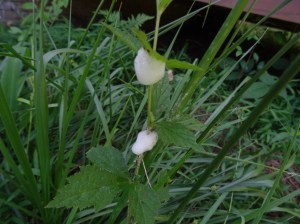
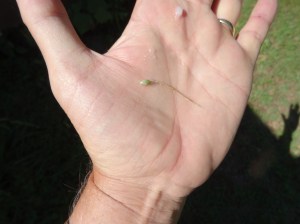
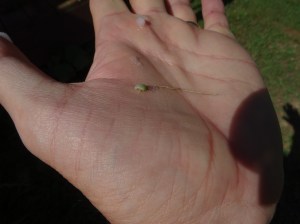
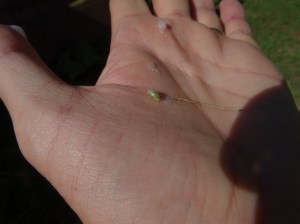
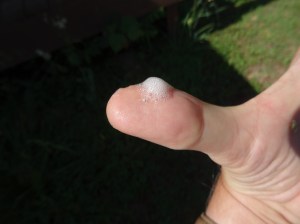
Technically, this is spit.Well,  It is bubbles in the saliva of a Spit Bug. These little guys are very interesting. If you look inside the bubbles you will find the little insect larva that generates all the bubbles.


Why Do They Do This?

That is the big question.  To find out the rest of the story you will have to open the following Powerpoint and read all about it.


When you think of animals that leap, what first comes to mind? Probably frogs, grasshoppers, and kangaroos. However, do you know which creature is considered the greatest leaper of all? Can you imagine a creature that can withstand many more times the G forces created by a launch than even mankind? Then you will enjoy learning about the Spitbug which grows up to become the Froghopper insect.

Click below to open the Powerpoint presentation. You can also open it in Keynote, if you have that app.

froghoppers

Big Bird, Great Bird! The Blue Heron

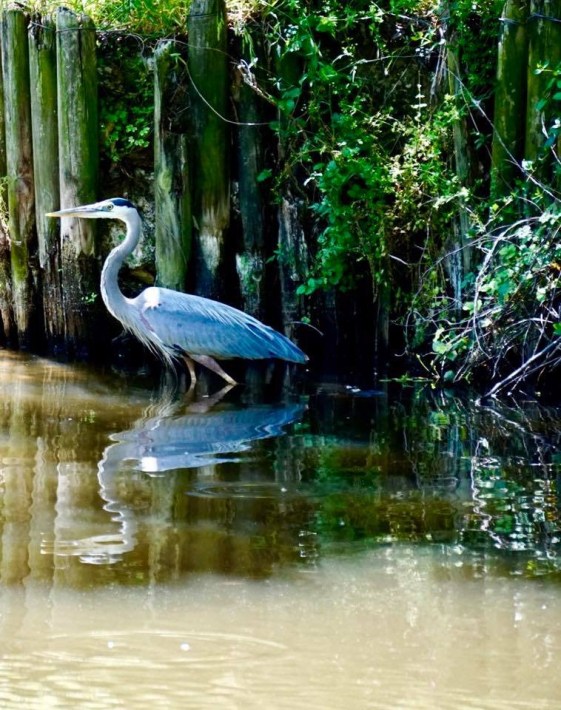
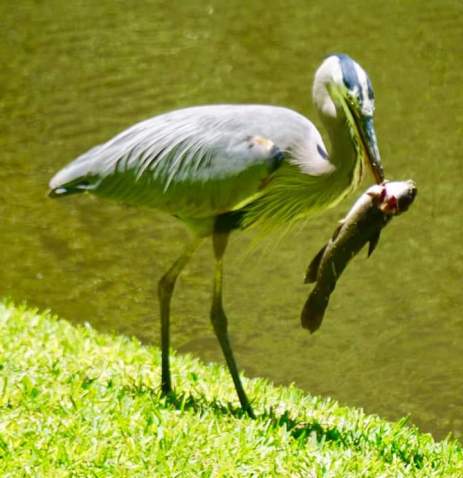
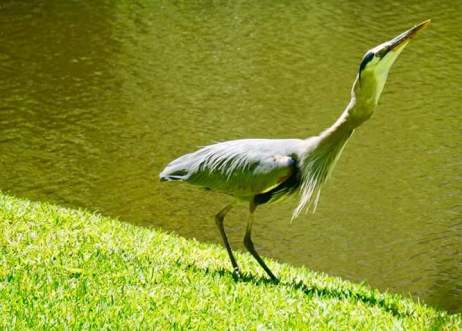
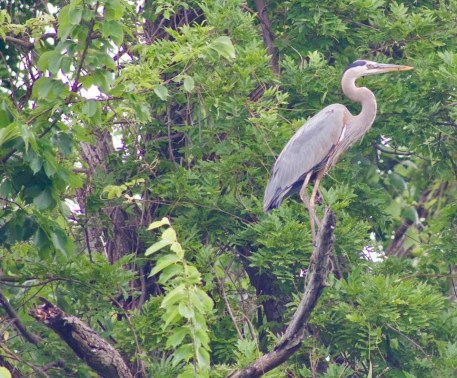
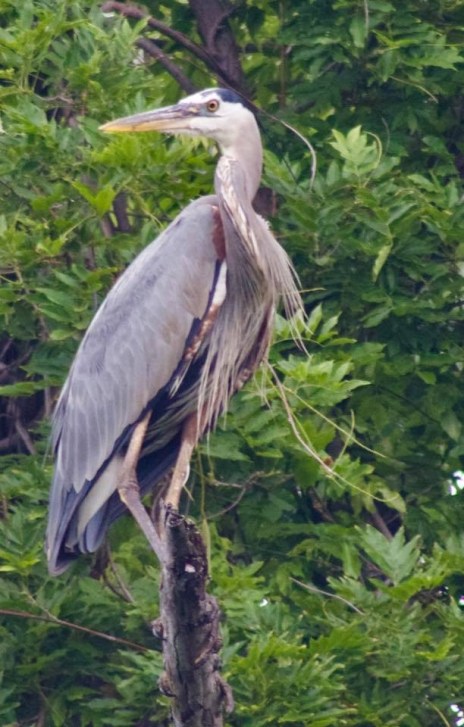
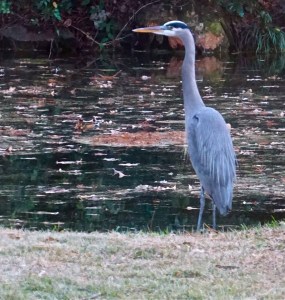
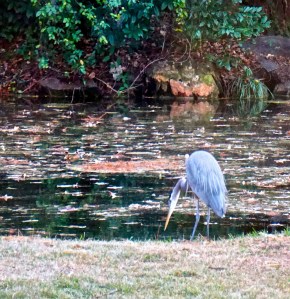
One night while fishing for catfish, out on the end of the pier, I was startled by a huge bird landing right next to me. Not only was I startled, but the bird gave out a loud squawk when it realized it was not alone. The bird rustled its wings and gave flight rising like a large Pteradactyl. It flew just a short distance away and landed near the shore about 100 feet away. Throughout the night we both kept an eye on one another. Though I caught larger fish he was content to spear the shiner minnows swimming near the surface in the moonlight. He also caught a larger bluegill when it wandered too close chasing the shiners.The heron is a very patient fisherman. He stood in the shallow water on his long stilt-like legs. He kept his long neck in an S shape. By doing this he had a springlike reaction when he jabbed his spear, his long beak, into the water. Once he caught a fish he would often squeeze it several times in its beak while flipping it up to a point where it could swallow it.
img_4202  img_4204

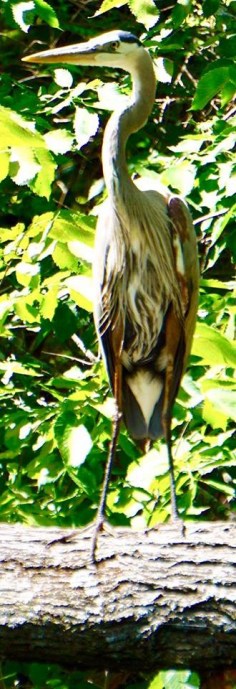
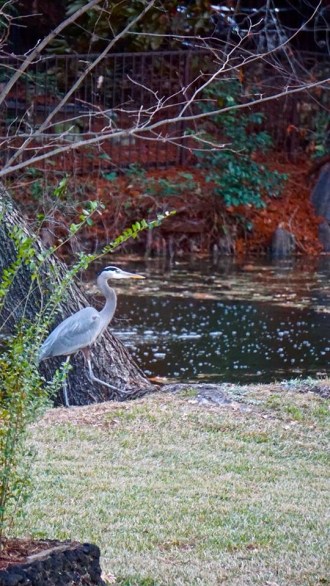
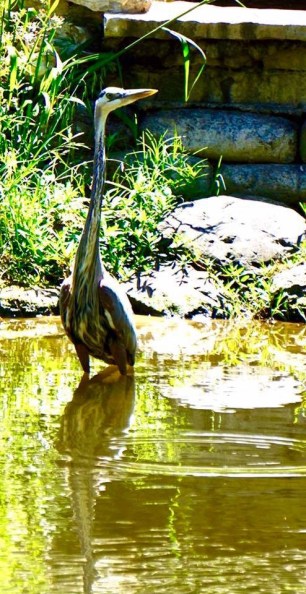
These pictures were taken at my son’s house in Texas. He really captured the colors of these majestic birds well.
 

img_4203


I once lived on a ranch in Northern California near Clearlake. On the ranch we had two small ponds full of fish. The pond on the front of the property had hundreds of small catfish in it. I observed that the herons there were specialist in removing the organs from inside the fish. They left the rest of the spiny small fish on the shore for other creatures to feed on. I have never seen this behavior anywhere else. Usually they eat the whole fish in one big gulp.

Did you know these birds are about 4 feet high and have a wingspan of about 6 ft. They usually hunt alone by spreading out around the waterways where they feed. They do, however, enjoy nesting in large groups which adds extra protection by adding a lot of eyes to keep watch on potential threats to their eggs and young. Interestingly, the daddy herons gather the sticks for the nest building but leave the construction of the nest to the mother. The nests are huge and can be found in the tops of trees near the shore. Both parents help in feeding the young. The parents catch and eat fish and then regurgitate it for the babies so it is easier for them to digest. Doesn’t sound pleasant to me, but I’m not a heron. It takes a lot of feeding to raise the young. There are usually around five or six of them in the group. Many enemies can snatch the young if the parents aren’t watchful. These include: crows, ravens, raccoons, hawks, eagles, bears and snakes. The parents take their responsibility to care for the young seriously. The males spend about 10 and a half hours on the nest while the eggs are incubating. The females spend the rest of the time. Once hatched a parent is usually nearby while the other parent is hunting food.

Interestingly, fish is not the only thing on the menu. They also eat small rodents like mice, gophers and voles, frogs, snakes, insects, baby turtles, as well as other smaller birds.

After about 80 days the young are ready to leave the nest to fend for themselves.

The scientific name of the Great Blue Heron is Arden  herodias.


Heron Catching and Eating a Catfish:
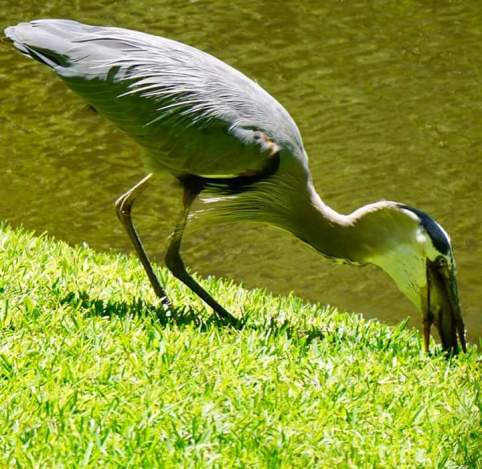
I can’t help but be amazed at how much care God put into designing these birds and giving them the ability to catch their own food and build huge nests out of sticks. He provided everything they would need to survive and help maintain the balance of the ecosystems where they live. If He cares for them, He surely is able to care for us.

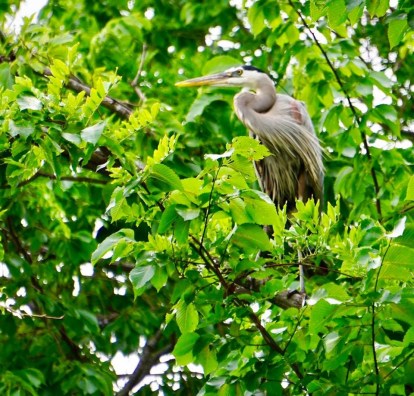
More Pictures Around Spring Lake:


Another Beautiful Blue Heron:

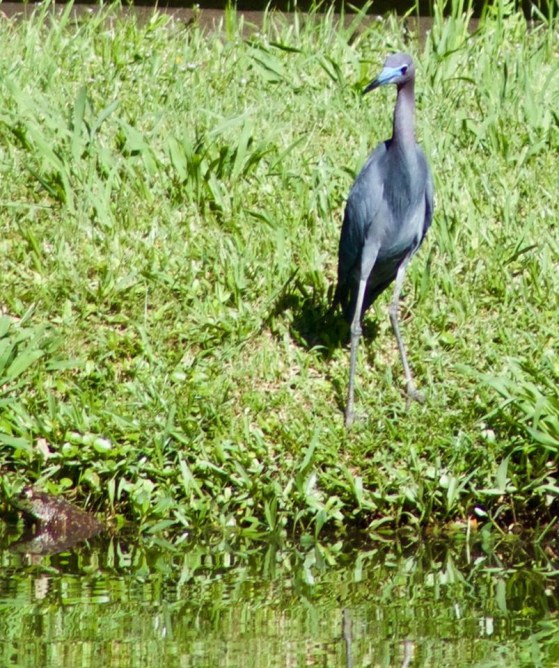
Another near relative of the Great Blue Heron is the Little Blue Heron. It has a more purplish hue and more vivid light blue on its face. Below are a couple pictures of these birds capture in pictures at the same place as the Big Blue above. Notice the Bull Frog that the bird is eyeing. He better watch out or he will become lunch!
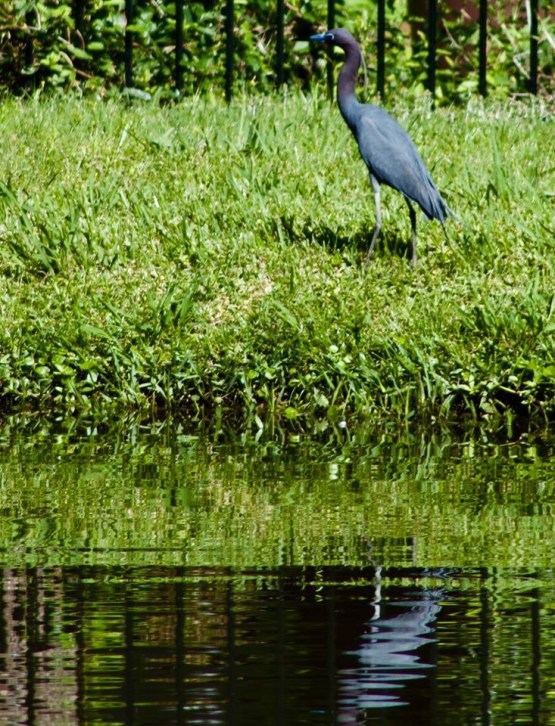
If you want to learn more about herons, you can do research by reading about them. More fun, however, is to spend some time out watching them for a few hours. Take a pair of good binoculars and you can see a lot more of the action. Be prepared, however, to wait patiently. Why not take a fishing pole along and do some fishing while you wait. See if you can out-fish the amazing herons.